An inverse problem is a class of problems where the goal is to determine the underlying causes or parameters of a system from observed effects or measurements. In physics, this often means reconstructing the properties of an object or interaction from the data it produces. For example, in the provided research, scientists use the inverse problem to infer the mass hierarchy of neutrinos from the signals of a supernova explosion, or to map dark matter distribution from gravitational lensing observations.
History
The formal concept of inverse problems was established in the early 20th century, with significant contributions from Hadamard (1902) who defined well-posedness, and later by Tikhonov (1963) who introduced regularization methods for unstable solutions.
How it works
The forward problem is well-defined: given a set of parameters, compute the expected observations. The inverse problem reverses this, but it is often ill-posed — multiple parameter sets can produce the same observations, and small measurement errors can lead to wildly different solutions. To solve it, physicists use statistical methods like Bayesian inference, regularization techniques, or iterative algorithms that compare simulated predictions with actual data, refining the parameters until a best fit is achieved.
In practice
Inverse problems are used in medical imaging (CT scans and MRI), geophysics (seismic tomography), and astrophysics (reconstructing the properties of distant objects from telescope data).
Fun fact
The inverse problem is so fundamental that even the human brain solves it constantly — interpreting the 2D image on the retina to infer the 3D structure of the world.
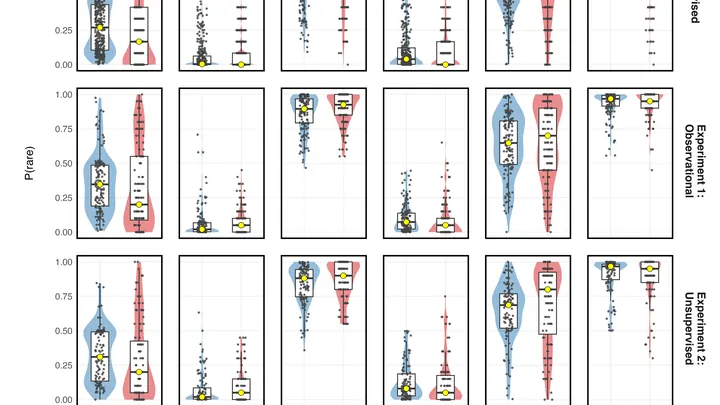
In a warehouse, there are boxes of apples and pears. There are many apples and few pears. But when the stock clerk says "a fruit with smooth skin," we are somehow more likely to recall the rare pear than the common apple. This is the inverse base-rate effect — a persistent glitch in how the brain resolves ambiguity between categories.
The universe sometimes resembles a pot of boiling water. With enough heat, liquid turns to vapor: that's a phase transition. Something similar could have happened in the early universe: a field filling space suddenly changed its state, like water becoming gas.
Two ultra-dense stars spiral around each other and eventually collide. This dance lasts only moments, but it sends powerful ripples through space — gravitational waves. After the merger, a rapidly spinning blob remains, ringing like a bell, and that ring carries information about what the stars were made of.
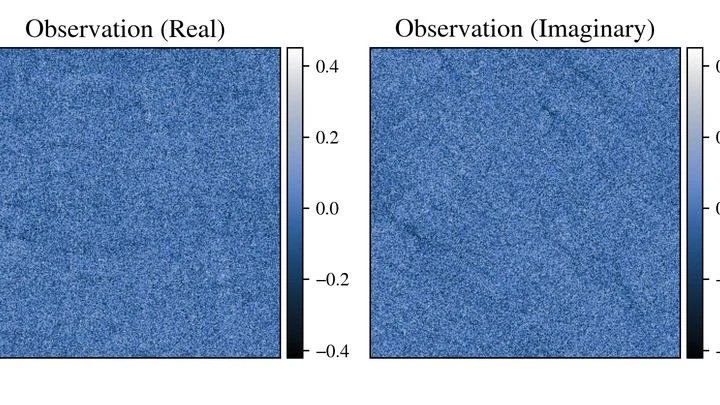
A camera takes a snapshot, but the sensor is noisy, the optics blur, and some pixels are overexposed. Reconstructing the original picture is like guessing a melody from a scratched record: there are many possibilities, and which one is true is unclear.
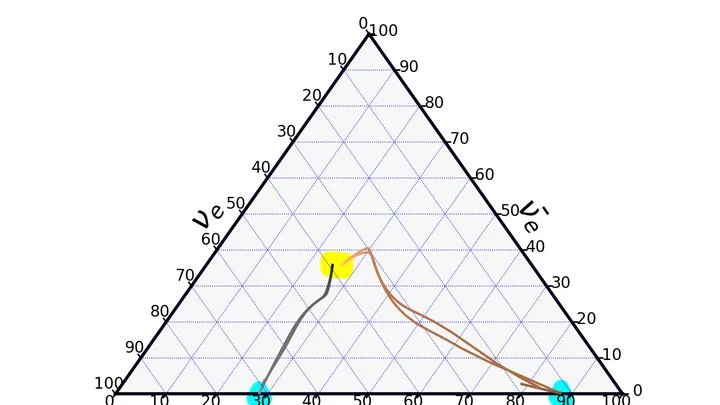
A pot of soup simmering with three ingredients. The chef adjusts the proportions on the fly, and the progress is tracked by the position of a point on a triangular scale. That's roughly how physicists tackle neutrinos from a supernova explosion.
A thin film is like a taut sheet: the thinner it is, the harder it is to push through. Scientists have noticed that films made of very different materials (graphene, graphene oxide, polymers) resist projectile penetration surprisingly well under high-speed impact. And the thinner the film, the more energy it absorbs per unit mass.
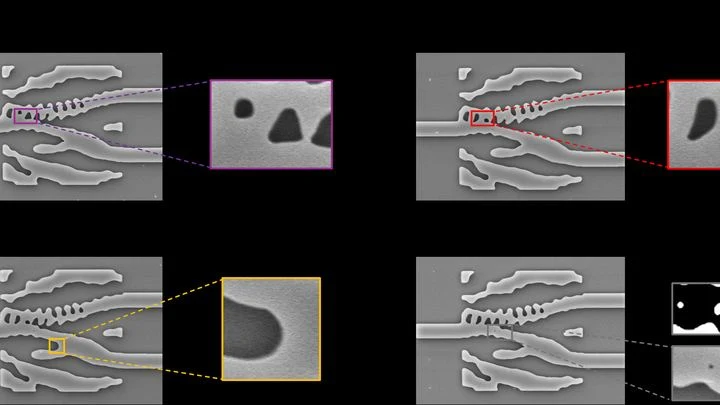
Modern computer algorithms design photonic integrated circuits — light chips capable of separating signals by frequency (color) for spectroscopy. Unlike traditional engineering, light paths in these chips are not straight waveguides but chaotic, almost organic mazes.
Ocean currents intertwine like sticky spider silk: every disturbance leaves a trace that does not vanish instantly. Climatologists have been used to treating random jolts in this web as invisible and memoryless, but new research shows that noise has memory, and that memory strengthens connections between distant nodes.
Setting up an orchestra without a conductor: the algorithm itself decides which instruments (basis functions) and at what volume (weights) should play to reproduce Earth's gravitational symphony.