A tuning fork is a two-pronged metal device that vibrates at a specific, stable frequency when struck, producing a pure musical tone. It was invented in 1711 by John Shore, a British trumpeter, to provide a reliable pitch standard for tuning musical instruments. The device's frequency depends on the length, thickness, and material of its prongs, making it a precise and reproducible acoustic reference.
History
John Shore, a trumpeter and lutenist in the English court, invented the tuning fork in 1711 and used it to tune musical instruments.
How it works
When struck, the two prongs of the tuning fork vibrate in opposite directions, creating a symmetrical oscillation. The vibrations generate sound waves in the surrounding air at a frequency determined by the fork's physical properties. The design minimizes energy loss to the handle, allowing the fork to sustain its tone for a long time. The frequency is highly stable because it is determined by the fork's geometry and material, not by the force of the strike.
In practice
Tuning forks are used in acoustics to calibrate instruments, in medicine to test hearing and bone conduction, and in physics as a reference for frequency measurements, such as in the study of magnetic waves and mechanical memory devices.
Fun fact
A tuning fork's frequency is so stable that it was used as a timekeeping standard in early clocks and watches before the advent of quartz oscillators.
An orchestra without a conductor: each musician tunes to a neighbor, and out of that comes a well-coordinated melody. In the world of microscopic magnets, the role of that orchestra is played by a tiny neodymium sphere levitating above a superconducting film.
A door lock with two different keys: one turns easily, the other demands noticeable effort. That is how two layers of hexagonal boron nitride behave when twisted relative to each other. This material consists of boron and nitrogen atoms arranged in a hexagonal lattice, and its layers can sit in different registries, like two identical grids shifted by different angles.
Two transparent sheets with circles drawn on them. If you stack them exactly, the circles align. But give one sheet a slight twist, and a new pattern emerges: in some places the circles bunch together, in others they spread apart. That's roughly how moiré works — an unexpected pattern born from rotating two periodic structures.
A levitating dust grain in an optical trap is an ideal pendulum for measuring gravity. It hangs in vacuum, never touching the walls, and its motion depends only on external forces. The new work proposes an improved sensor: a mechanical 'squeezed' qubit based on a nonlinear oscillator.
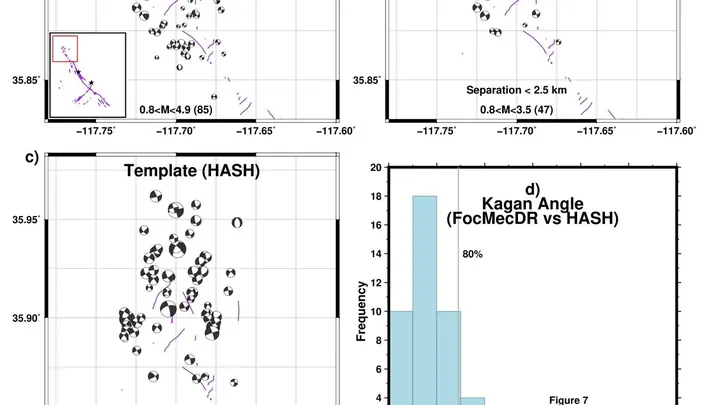
Seismologists catch every underground tremor the way a doctor listens to a heart. But small earthquakes have weak and fuzzy signals: it's hard to tell exactly where the rock shifted. Usually, scientists look at the first wave motions: compression or dilation. But if the tremor starts gently, without a sharp snap, the picture gets blurred.
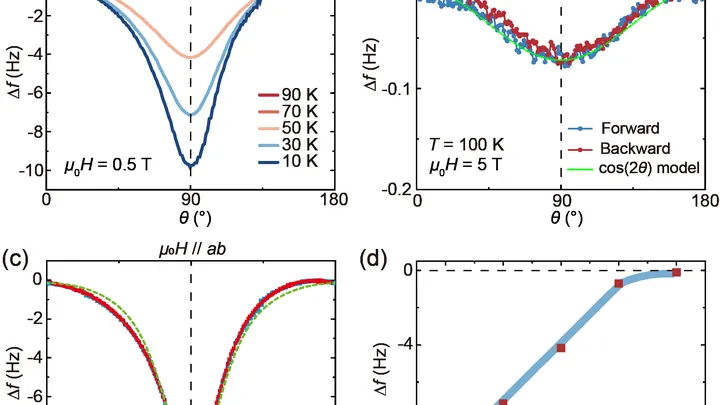
A magnet, like a compass needle, likes to point in a certain direction. But what if the material is layered, like a stack of pancakes? Scientists took just such a magnet made from a compound of chromium, germanium, and tellurium and set out to find out how stubbornly it resists having its magnetization turned.
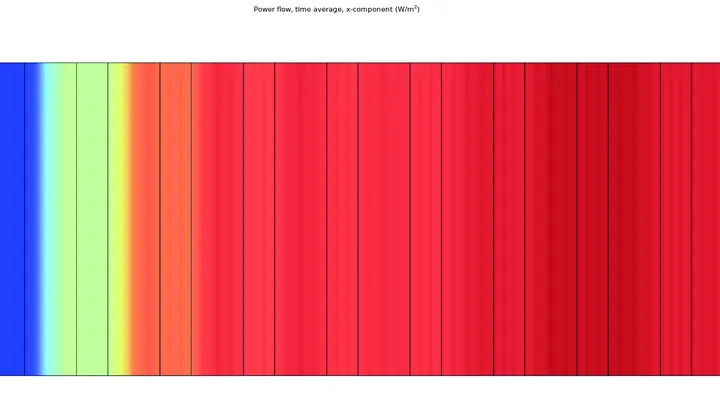
A beam of light passing through a transparent plate usually keeps its color. But if you stack the plate from thin alternating layers, it becomes a grating that reflects and transmits waves selectively. This has long been used in lasers and optical filters. Now such gratings have been made to vibrate, and light started changing color.
If you compress a plate with accordion-like cells, a kink wave runs through it, like a wrinkle in a rug when you push it with your foot. Such waves can switch the material between two stable shapes, and this is the basis of mechanical memory. But if a table leg gets in the way of the wrinkle, it gets stuck. In a new study, researchers showed how to nudge it loose without brute force.
If you toss a stone into a pond, ripples spread across the water. Tiny magnetic crystals also host waves — except it's not water that oscillates but the direction of magnetization. These are called spin waves. They travel through the crystal like ripples on a surface and can carry information.