Magnetic Lego: Unexpected Flexibility in Atomic Layers express
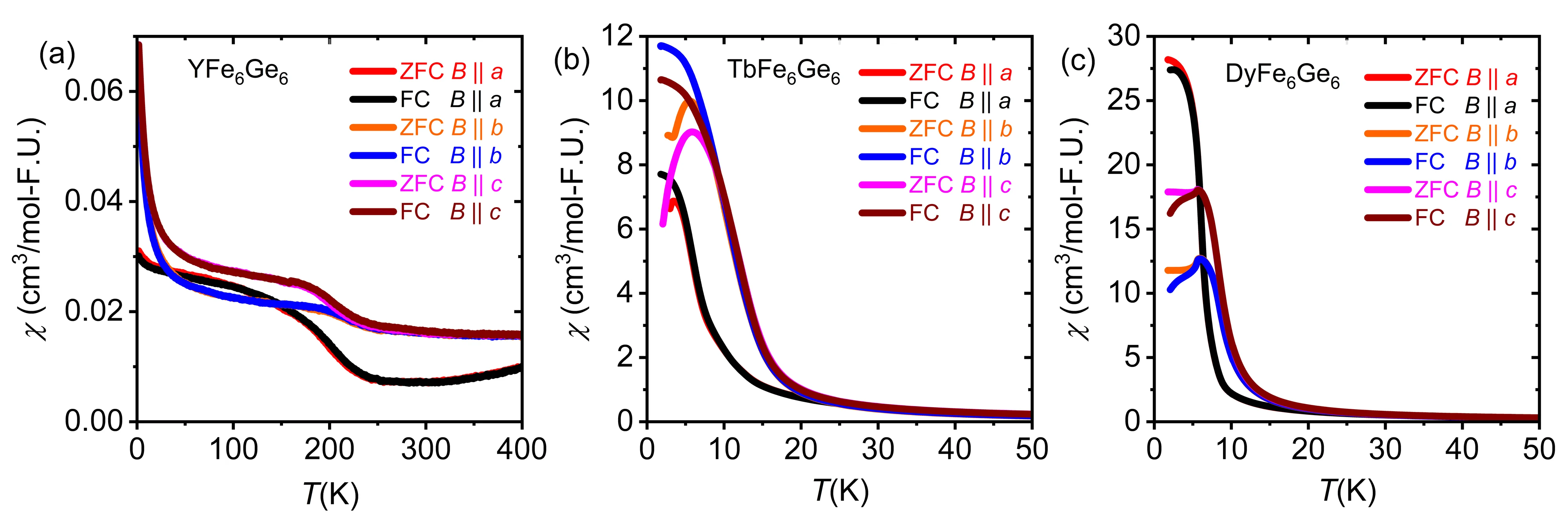
Imagine a stack of pancakes where each pancake is magnetized, but the magnetization directions in adjacent pancakes are opposite. That's exactly how this new magnetic material is arranged: in each atomic layer, all magnetic moments — the atom's 'arrows'—point in one direction, while the next layer is magnetized in the opposite direction. The layers themselves are formed by atoms arranged on a kagome lattice — a pattern of triangles resembling a woven basket. However, the ideal geometry is distorted here: some atoms are replaced by germanium 'dumbbells'—pairs of germanium atoms acting as a single structural unit. The rare-earth atoms in the material exhibit magnetic order (that is, they align their magnetic moments coherently) only at extremely low temperatures around –264 °C. To achieve such cold, liquid helium is used. The detailed structure was revealed using X-ray diffraction (a method based on the scattering of X-rays by the crystal lattice, developed by Bragg) and spectroscopy, which analyzes the interaction of matter with radiation. Calculations for this system revealed unexpected mechanical flexibility: attempting to flip an entire magnetic layer requires enormous energy, whereas rotating a single atomic chain within the layer is surprisingly easy. Such magnetic order drastically reduces entropy — a physical quantity characterizing the degree of disorder in the system. This opens up the possibility of controlled creation of fine magnetic patterns, which could become the basis for future quantum devices.
The word 'kagome' translates from Japanese as 'woven basket'—that's exactly the pattern of triangles formed by the atoms.