Why charged ‘astrons’ won’t replace dark energy ✛ ✎ ✦
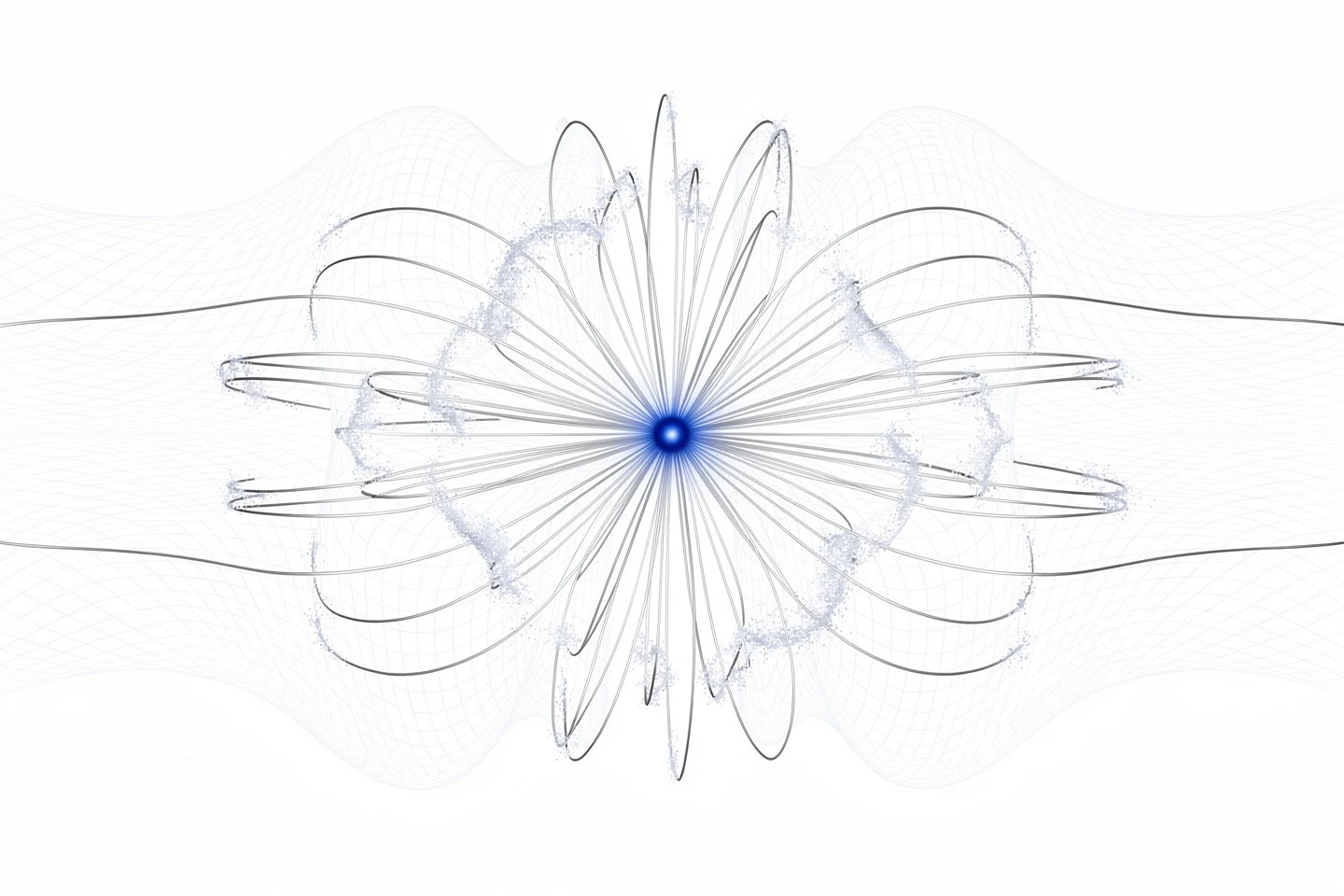
The Universe expands faster and faster. A hypothesis arose: what if it’s not dark energy pushing it, but supermassive charged objects — astrons? Yet for their electric repulsion to overcome gravity (described by spacetime curvature), they’d need an enormous charge. Ordinary gas infall provides only a tiny fraction. It’s like trying to shout down a thunderstorm — the surrounding gas instantly neutralizes any excess electricity.
Cosmic ionized gas works like a silencer: free charges flow and screen the astron’s field. Like a scream in a roaring hurricane, the electric signal fades, never reaching its neighbors. If, by some miracle, a charge did arise, the object would stop resembling a black hole: the event horizon would vanish, and light would only weakly bend around it — no shadow, no sharp ring.
But even then, astrons couldn’t mimic dark energy. Their collective electricity would dissipate during expansion too quickly, just like ordinary radiation. Acceleration needs a force that barely fades with time. Future computer simulations and telescopes like James Webb, which hunts for galactic redshift, will help test this. Meanwhile, the mystery of dark matter and dark energy remains unsolved. In seeking answers, scientists lean on the equations of Lemaître, Schwarzschild, and Maxwell.
A highly charged astron wouldn’t cast a shadow like a black hole: light wouldn’t vanish behind a horizon, but would merely bend around it, as if flowing around an invisible sphere.