The Outskirts of Ancient Galaxies Change Our View of the Universe ✛ ✦
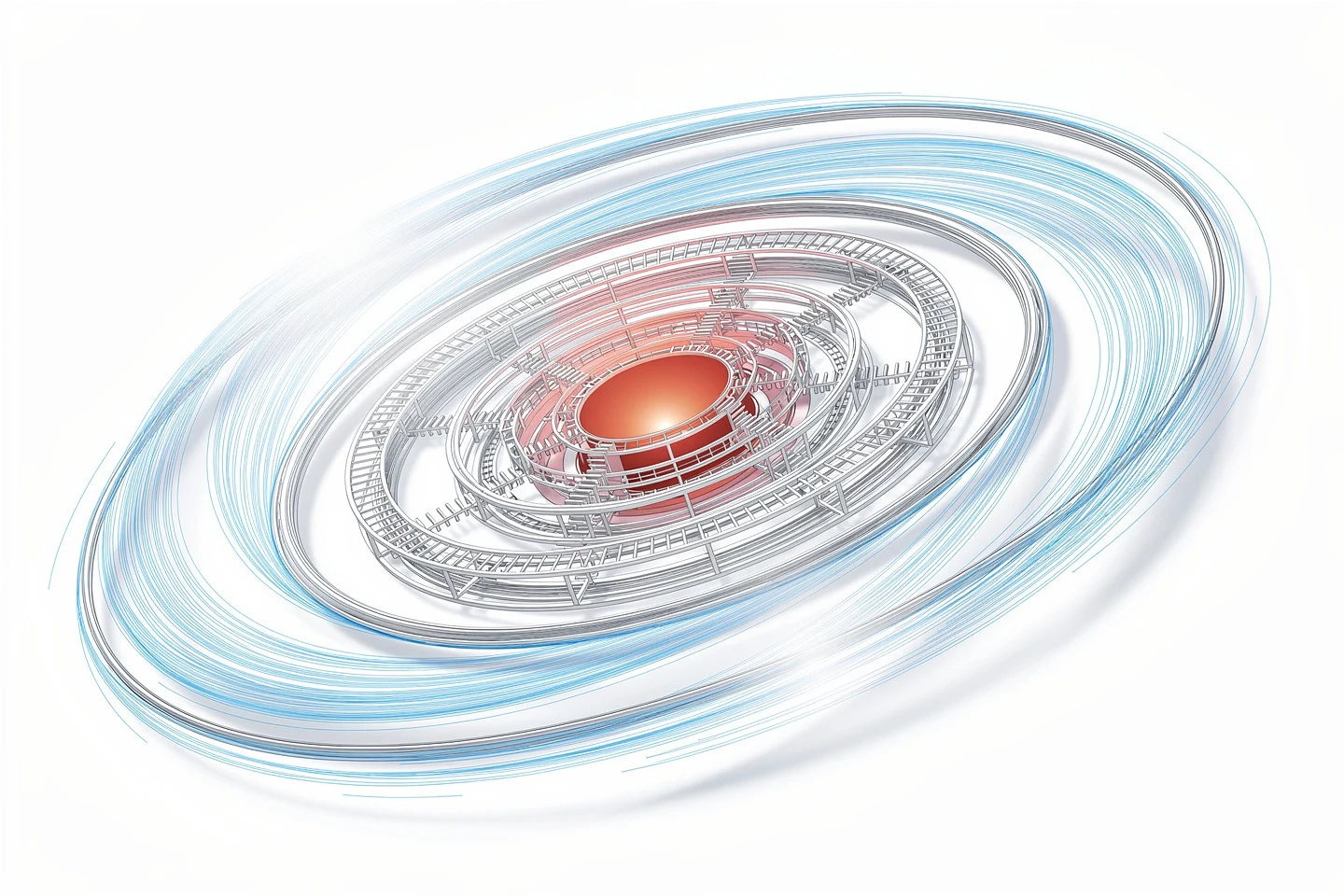
For a long time, astronomers looked at distant galaxies as an unfamiliar city, assessing its age only by the central square with ancient cathedrals. The bright core seemed ancient, and the whole galaxy appeared disproportionately massive for the young Universe. But the new James Webb telescope allowed us to see the outskirts: there the stars are younger and bluer. The age difference between the center and the edge reaches a billion years — as if the heart of the city was built in antiquity, and the suburbs were built yesterday. Previously, with spectroscopy (splitting light), the instrument mainly captured the center, and the mass was overestimated. Analyzing the entire area using photometry (brightness measurement) lowered the estimates, and the galaxies no longer contradicted the Big Bang theory and dark matter — an invisible substance holding stars, which was pointed out by Vera Rubin.
The discovery restores harmony to the picture of expansion of the universe, described by Edwin Hubble and Georges Lemaître. Now astronomers plan 'age maps' of galaxies to understand how cosmic dust gives birth to new stars.
One of the galaxies formed when the universe was 300 million years old — like a newborn with a gray beard.