A reference frame is a coordinate system used to specify the position, velocity, and other physical quantities of objects. The choice of reference frame can dramatically affect measured values—for example, an object's speed is different when measured from a moving train versus a stationary platform. In physics, reference frames are essential for formulating laws of motion and relativity, as they define the perspective from which observations are made.
How it works
A reference frame consists of an origin and a set of axes (e.g., x, y, z) that can be at rest or in motion relative to other frames. Physical laws, like Newton's equations, take different forms depending on whether the frame is inertial (non-accelerating) or non-inertial (accelerating, where fictitious forces appear). In special relativity, measurements of time and space depend on the relative motion of frames, leading to effects like time dilation and length contraction.
In practice
Reference frames are used in GPS navigation, where satellite clocks must be corrected for both special and general relativistic effects relative to the Earth's frame.
Fun fact
In general relativity, a freely falling elevator is a local inertial frame, which is why astronauts feel weightless—they are in free fall.
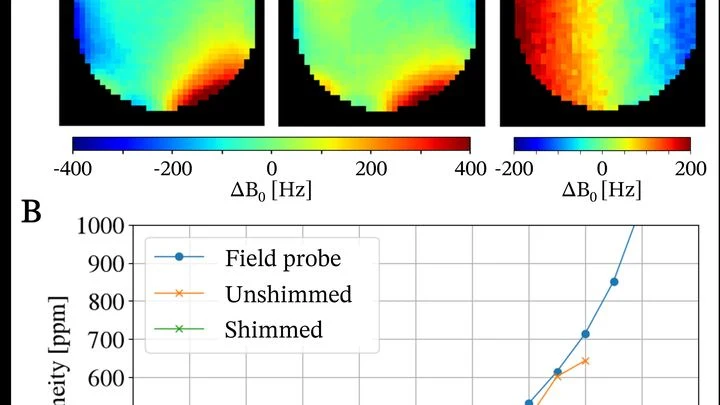
An MRI scanner is a big magnet that aligns hydrogen atoms in the body and then picks up their response signal. Such machines usually take up an entire room and cost as much as a nice house. Engineers from several labs decided to build a scanner that fits in a suitcase and released all the plans as open source.
Researchers took 16 everyday activities — from washing dishes to squatting — and broke the movements down into elementary components, much like a spectroscope splits light into a spectrum. Comparing three approaches, they found an unexpected key to recognition: a single averaged snapshot is enough. Only nine joints out of dozens carried the crucial information — the rest hardly mattered.
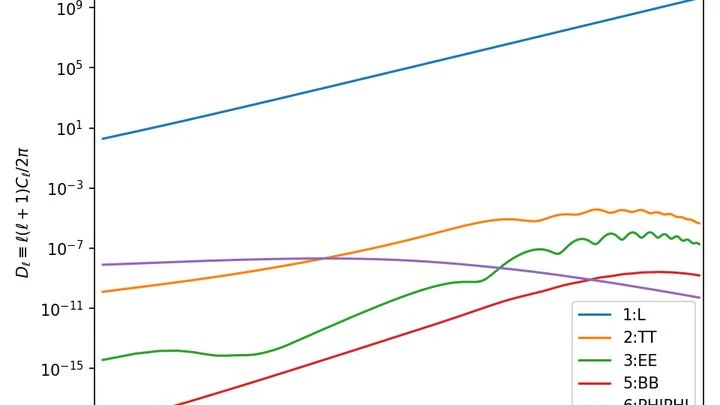
According to Einstein's general theory of relativity Albert Einstein, a massive rotating body drags the fabric of spacetime along with it, much like a spoon twirled in a jar sets thick honey flowing.
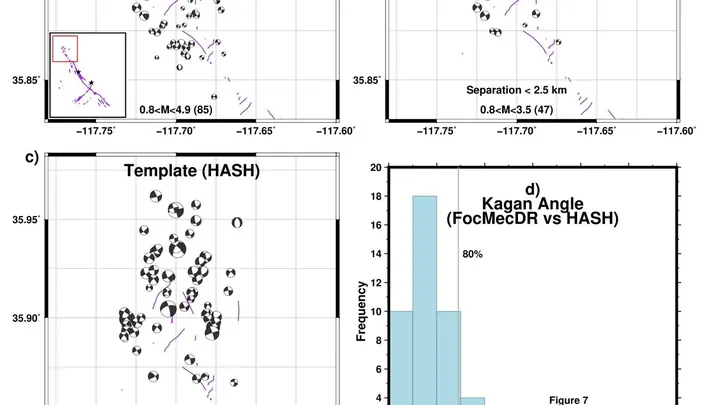
Seismologists catch every underground tremor the way a doctor listens to a heart. But small earthquakes have weak and fuzzy signals: it's hard to tell exactly where the rock shifted. Usually, scientists look at the first wave motions: compression or dilation. But if the tremor starts gently, without a sharp snap, the picture gets blurred.
There's no tool to measure distances to faraway galaxies, but nature left a clue: after the Big Bang, sound waves created rhythmic clumps of matter. Today, this is noticeable as a slight preference for galaxies to be at a certain distance from each other — a built-in ruler.
According to physicist Hugh Everett, every observation splits the universe into parallel branches. Normally, your memory of the outcome locks you into one branch, like a key keeping a door shut. A new protocol, reality steering, shows you can pick that lock: erase the memory, and the barrier fades, letting you slide into another reality.