We have retold 4 papers by this author. 2 of them with a full read. most often about: magnetar, neutron star, pulsar. 30 co-authors across our retellings.
Neutron stars are ultra-dense remnants of supernovae the size of a city. In the 1930s, Fritz Zwicky hypothesized their existence, and later Jocelyn Bell Burnell discovered pulsars — rapidly rotating neutron stars.
The edge of the supernova remnant RCW 86 is where the shock wave from a star's explosion slams into the surrounding gas. The IXPE telescope looked at the southwestern part of this boundary in X-rays and tried to catch polarization — the way these rays oscillate.
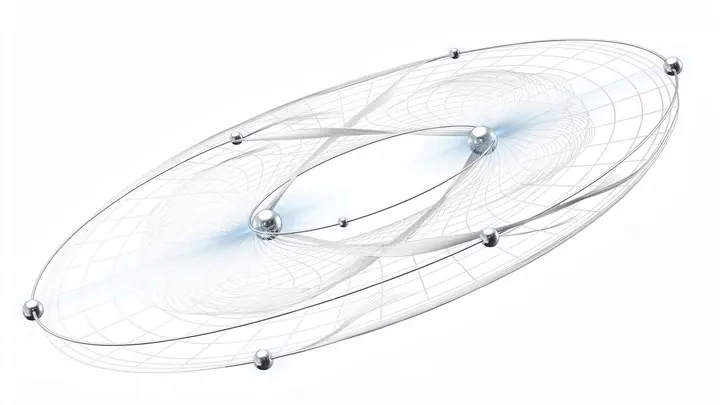
Imagine two neutron stars, compressed to the size of a metropolis yet weighing one and a half Suns each. They whirl in an unrestrained gravitational dance, drawing together and flying apart every 4.4 hours. At periastron — the point of closest approach — only a couple of light-seconds separate them, and their speed reaches three and a half million kilometers per hour.
At night in fog, a searchlight works worse than in daylight: tiny droplets scatter the beam, and distant objects drown in the murky haze. Much the same way, radio waves from pulsars get lost in the interstellar medium when there are many free electrons between us and the star.