Michael Kramer

7 articles · 30 co-authors · latest: 2026-09-09
891 citations · h-index 6 · 27 papersData: Semantic Scholar

We have retold 7 papers by this author. 4 of them with a full read. most often about: fast radio burst, big bang, Hubble Space Telescope. 30 co-authors across our retellings.

Links in the knowledge graph
High Energy2026-01-012 minarXiv:2601.00394express
A Black Hole's Shadow Betrays Its Spin
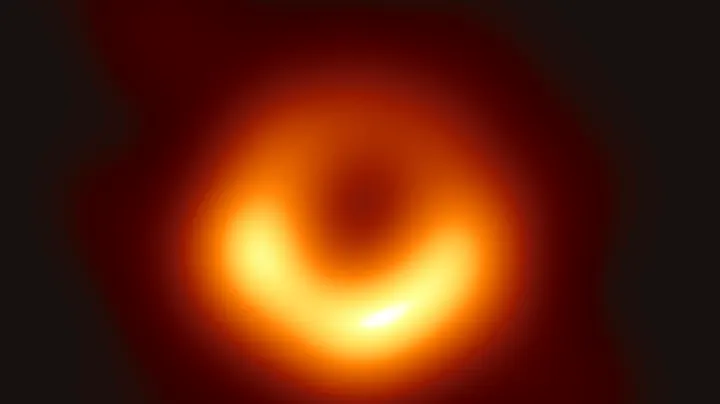
In 2019, astronomers unveiled the first-ever image of a black hole's shadow — a dark void encircled by a lopsided orange ring. This is the supermassive black hole at the heart of galaxy M87, 55 million light-years away. The ring isn't just glowing: one side is noticeably brighter than the other, like a campfire burning unevenly, with flames leaping higher on one side.
High Energy2026-01-191 minarXiv:2601.13356express
The Shadow of a Black Hole and Its Invisible Tail
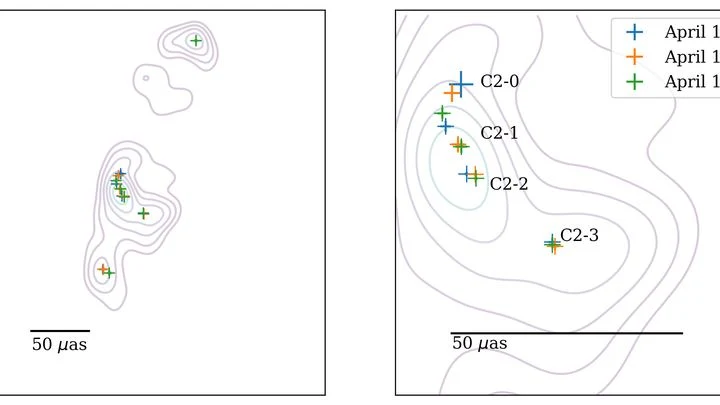
Radio telescopes scattered across the globe pick up waves from distant black holes. But two telescopes placed almost side by side see only a blurry blob — fine details are beyond them. Usually, such pairs are considered useless and discarded. But that's a mistake: even a blurry blob holds clues.
Galaxies2026-04-111 minarXiv:2604.10287express
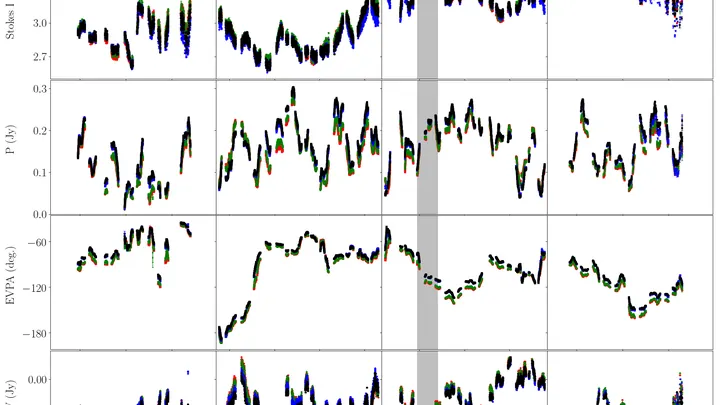
The Heart of the Milky Way Flickers in Polarized Light
At the center of the Milky Way lies the supermassive black hole Sagittarius A*. It is four million times more massive than the Sun, but by cosmic standards it behaves quietly: it only occasionally flares up when it swallows a clump of gas.
Neutron Gravita-Waltz and Dance with a Defect
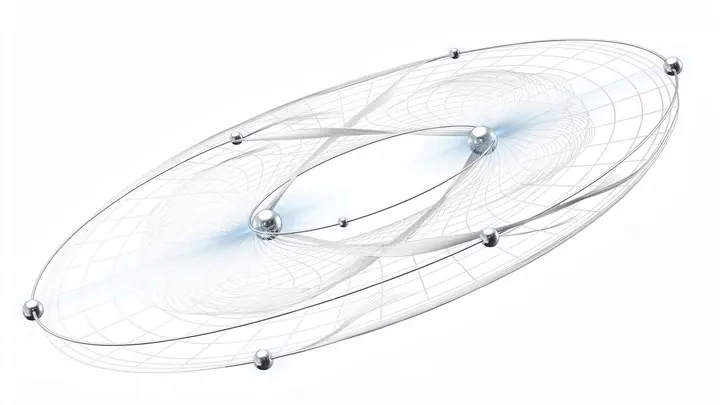
Imagine two neutron stars, compressed to the size of a metropolis yet weighing one and a half Suns each. They whirl in an unrestrained gravitational dance, drawing together and flying apart every 4.4 hours. At periastron — the point of closest approach — only a couple of light-seconds separate them, and their speed reaches three and a half million kilometers per hour.
Galaxies2026-07-173 minarXiv:2607.16104
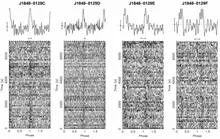
A Searchlight Cutting Through Fog: How MeerKAT Found Pulsars in a Shrouded Cluster
At night in fog, a searchlight works worse than in daylight: tiny droplets scatter the beam, and distant objects drown in the murky haze. Much the same way, radio waves from pulsars get lost in the interstellar medium when there are many free electrons between us and the star.