Black Hole Pinball: How Spin Creates Dark Matter express
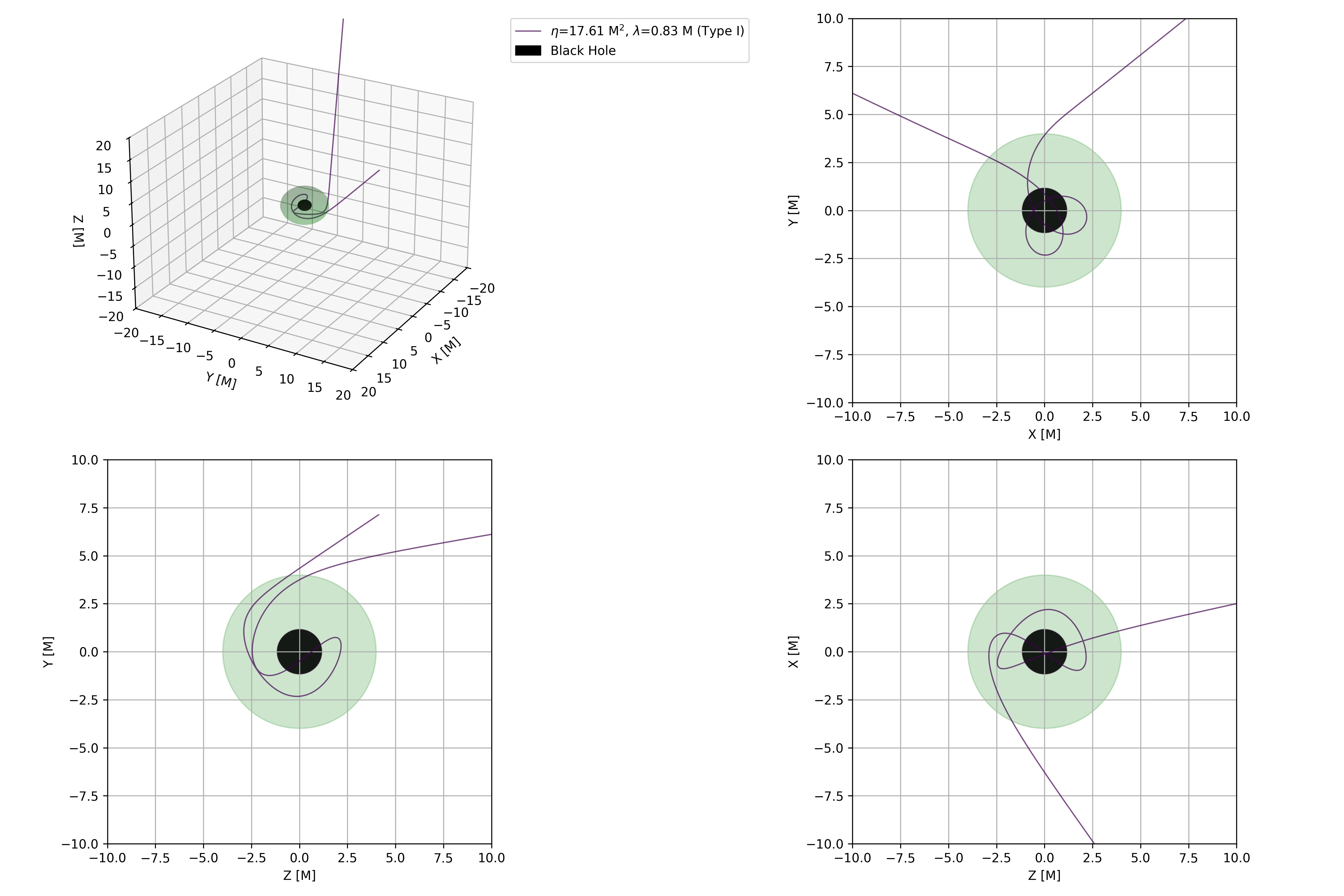
Light passing by a black hole falls into a gravitational trap: its trajectory curves and the particle bounces along a nearly closed orbit, like a pinball. The longer this frantic dash, the more likely it is that jolts from magnetic fields transform the photon into an axion — an invisible particle that likely makes up dark matter. This possibility was predicted by Frank Wilczek.
If the high-energy light from active black holes dims more than expected, then some of it has converted into axions. Thus, cosmic pinball becomes a cheap laboratory for hunting dark matter, replacing ground-based experiments.
In a pinball machine, the ball can bounce around for several seconds; near the black hole M87*, light lingers for just a millisecond, but in that time it covers tens of thousands of kilometers, and that instant is enough to spawn an axion, which then passes unimpeded through an entire planet.