One Hundred Ions in a Trap: How Quantum Noise Gives Birth to Chaos
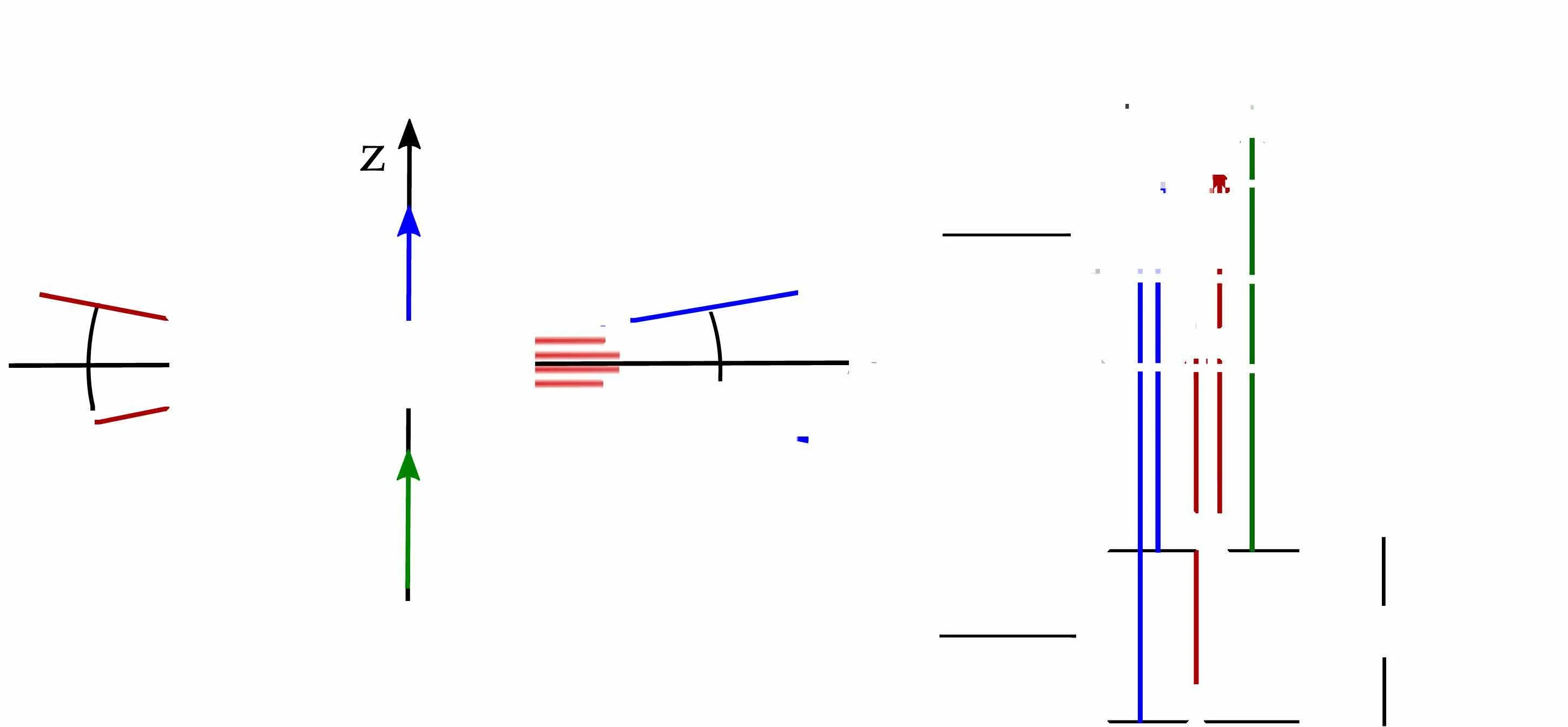
A hundred violinists in an orchestra all play from the same score. As long as the conductor keeps a steady tempo, the music sounds predictable. But once the players begin to hear one another, each adds their own tiny inaccuracies, and within a few bars the coordinated melody gives way to an improvisation no one could have foreseen. Physicists have now observed a similar transition from order to chaos in a crystal of one hundred beryllium ions held in a magnetic trap.
The trapped ions behave as a single quantum object: their internal states form a collective "spin," while their shared vibrations amount to one common "voice." These two sides are linked much as a violinist's bow is linked to the string: the bow's motion produces the sound, and the sound in turn affects the motion. In the experiment, the coupling between spin and vibrations was weak, and the system behaved predictably. As soon as the coupling was strengthened, the picture changed dramatically.
When the coupling became strong, trajectories in phase space turned into a tangled knot. The chaos that classical physics describes with a positive Lyapunov exponent here arises from quantum fluctuations rather than from external kicks. Near the unstable point, where classical dynamics freezes, it is quantum vacuum noise that sets off an avalanche of paired excitations. One spin flips together with one vibration, and that pair pulls the next one along, like a crack spreading through glass.
Numerical modeling predicts that two-mode squeezing emerges in this regime: quantum fluctuations of one quantity are reduced 2.6 dB below the standard quantum limit at the cost of growing fluctuations in the other. This resource is already in demand in quantum metrology, where squeezed states boost the sensitivity of sensors. At the end of the experiment, collapses and revivals of vacuum oscillations were observed, yet another confirmation that one hundred ions behave as a single quantum orchestra that, after its chaotic improvisation, finds a common rhythm again.
A crystal of one hundred ions at a temperature of 0.4 mK behaves as a single quantum object, even though each ion sits about 10 micrometers from its neighbors. The frequency of the axial center-of-mass motion matches the vibration frequency of a violin string, only a million times higher.
The idea of quantum chaos and entanglement in many-body systems echoes Greg Egan's novel Permutation City, where consciousness is modeled on a quantum computer and the boundary between order and chaos blurs.