Epilepsy is a neurologicaldisorder characterized by recurrent, unprovoked seizures, which are sudden, abnormal bursts of electrical activity in the brain. These seizures can manifest as brief lapses of awareness, muscle jerks, or full-body convulsions, depending on which brain regions are involved. Epilepsy affects about 50 million people worldwide, making it one of the most common neurological conditions. The disorder is not a single disease but a spectrum of syndromes with diverse causes, including geneticmutations, brain injuries, infections, and metabolic disorders.
History
Epilepsy has been recognized since ancient times; Hippocrates wrote about it around 400 BCE, arguing it was a braindisorder rather than a divine punishment. The modern understanding of its electrical basis emerged in the late 19th century with the work of John Hughlings Jackson.
How it works
Normally, the brain's neurons communicate through precisely balanced electrical and chemical signals. In epilepsy, this balance is disrupted: a group of neurons becomes hyperexcitable and fires synchronously, creating a 'storm' of electrical activity that spreads to other areas. This can happen due to altered ion channel function, changes in neurotransmitter levels (like too much glutamate or too little GABA), or structural abnormalities that create abnormal circuits. The seizure stops when inhibitory mechanisms kick in and restore normal firing patterns.
In practice
Epilepsy research drives the development of anti-seizure medications, surgical interventions, and brain-computer interfaces that can predict or even abort seizures in real time.
Fun fact
Some famous historical figures, including Julius Caesar and Fyodor Dostoevsky, are believed to have had epilepsy, and Dostoevsky's novels often describe seizure experiences in vivid detail.
A tightly stretched membrane, squeezed into a narrow case, decides on its own where to burst. So does a cell: when it is cramped, the point of division shifts from the middle, and the two halves come out unequal. Previously, it was thought that such asymmetry is predetermined by chemical labels, but the new work shows that mechanics alone is enough.
A city power plant is running itself into the ground, but the city doesn't know it yet. Lights are on in its homes, the streets are noisy, and only the engineers notice that the turbines are spinning more slowly and voltage is dropping in the wires. This is what an aging brain looks like: the neurons are alive, but their internal power plants, the mitochondria, are already losing capacity.
The classroom goes quiet after the lesson, but the echo still rings in the child's head: faces, objects, places. It is this echo, not the lesson itself, that decides what will stay in memory. For the first time, researchers have caught it in children aged 6 to 17.
Children memorized scenes inside an MRI scanner: they were shown a room, then an object or a face in a particular spot.
A person talks about a familiar face, and their speech becomes a mirror reflecting the workings of memory. In patients with temporal lobe epilepsy, this mirror sometimes grows cloudy: words come more slowly, phrases break off, pauses hang in the air. Doctors have long heard such complaints, but standard tests, where you have to name a picture or recall a list of words, often come back normal.
A translator gets distracted by every rustle in the hall, and a one-hour meeting stretches into two. That's how the standard method of locating an epileptic focus works: it waits for loud phrases — the moments when a seizure flares up in the brain.
When the conductor leaves the orchestra, the musicians keep playing from memory for a while. But without a unified rhythm, each one starts to speed up or slow down on their own, and the harmonious symphony turns into disjointed noise. According to new research, the brain and heart behave much the same way in the last hours of a person's life.
On one side of the scale are the genes you inherited from your parents. On the other is how many hours you actually sleep. For a long time, it seemed genetics pulled harder. But a new study covering more than 200,000 people shows that real sleep can tip the balance, especially when it comes to excess weight and diabetes.
A person hears a ringing that isn't there. The doctor asks them to describe it — loudness, pitch, persistence. But it's subjective: one might say "like a mosquito," another "like steam from a kettle." We need a way to see tinnitus directly, in the brain itself.
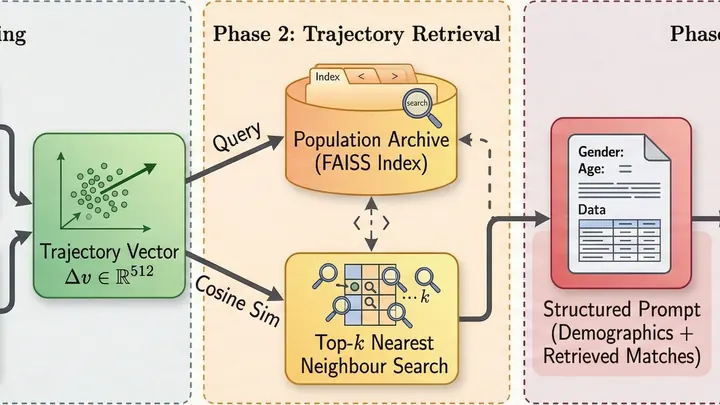
When medications fail to control epilepsy, doctors may suggest surgery: removing the brain region where seizures originate. But predicting whether it will help a particular person is tricky. Pre-surgery MRI scans show only the current state, not how the brain will change after the intervention.
The new approach works like a librarian searching for similar medical histories.
Brain aging is like the wear and tear on a bridge: cracks appear unnoticed, but if you reinforce the supports in time, the structure lasts longer. Three ordinary things turned out to be such supports — handgrip strength, the ability to move for a long time without breathlessness, and lung capacity.
The brain of a person with Parkinson's disease works like an orchestra where the conductor either freezes or waves the baton off-beat. Medications don't help everyone, so doctors turn to stimulation — weak electrical pulses that restore the rhythm.
At night in a dark room, the human body emits a barely perceptible glow. This light is so faint that only highly sensitive detectors can catch it. Some researchers thought this glow from the head could tell us about brain activity — no scanners or wires needed.
But when put to the test, the story changed.
Fluid flows in the narrow gaps between brain cells. It doesn't stay still: each heartbeat pushes it forward, and breathing adds its own waves. This was seen in images ten years ago, but only now have researchers calculated how this pulsing accelerates molecules.
If you drop ink into a stream, it drifts with the current. But if the stream speeds up and slows down, the ink spreads wider.
At night, the brain doesn't switch off. Instead, it sorts through the day's events like a librarian arranging books on shelves. But where do those strange, sometimes nonsensical dream images come from? Many have assumed they're just random noise with no meaning.
A new computer model shows that randomness doesn't hinder: it helps.
Toss a handful of pebbles into a stream: some settle on the bottom, others get swept around. That's roughly how waves behave in a disordered medium — light in frosted glass, sound in porous material. Usually, disorder slows things down: the wave gets stuck, spreads out, loses direction. But in a new study, physicists built an acoustic lattice where things work differently.
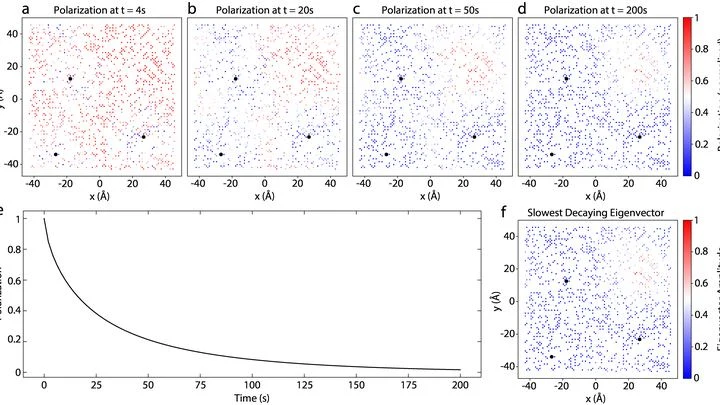
In the everyday world, order preserves and disorder destroys. But in quantum computing, this logic is turned on its head. Consider a diamond: carbon atoms with their nuclei and electrons behave like tiny magnets capable of storing a quantum "whisper"—information encoded in the orientation of their spins.
Hong Kong sits at a crossroads: tropical diseases arrive with travelers, while the local climate follows global cycles. In this city, from 2000 to 2016, two afflictions grew in different ways: dengue fever surged in sharp waves, while Guillain–Barré syndrome (acute paralysis, often after infections) crept upward slowly but steadily.