How to See the Invisible in Space express
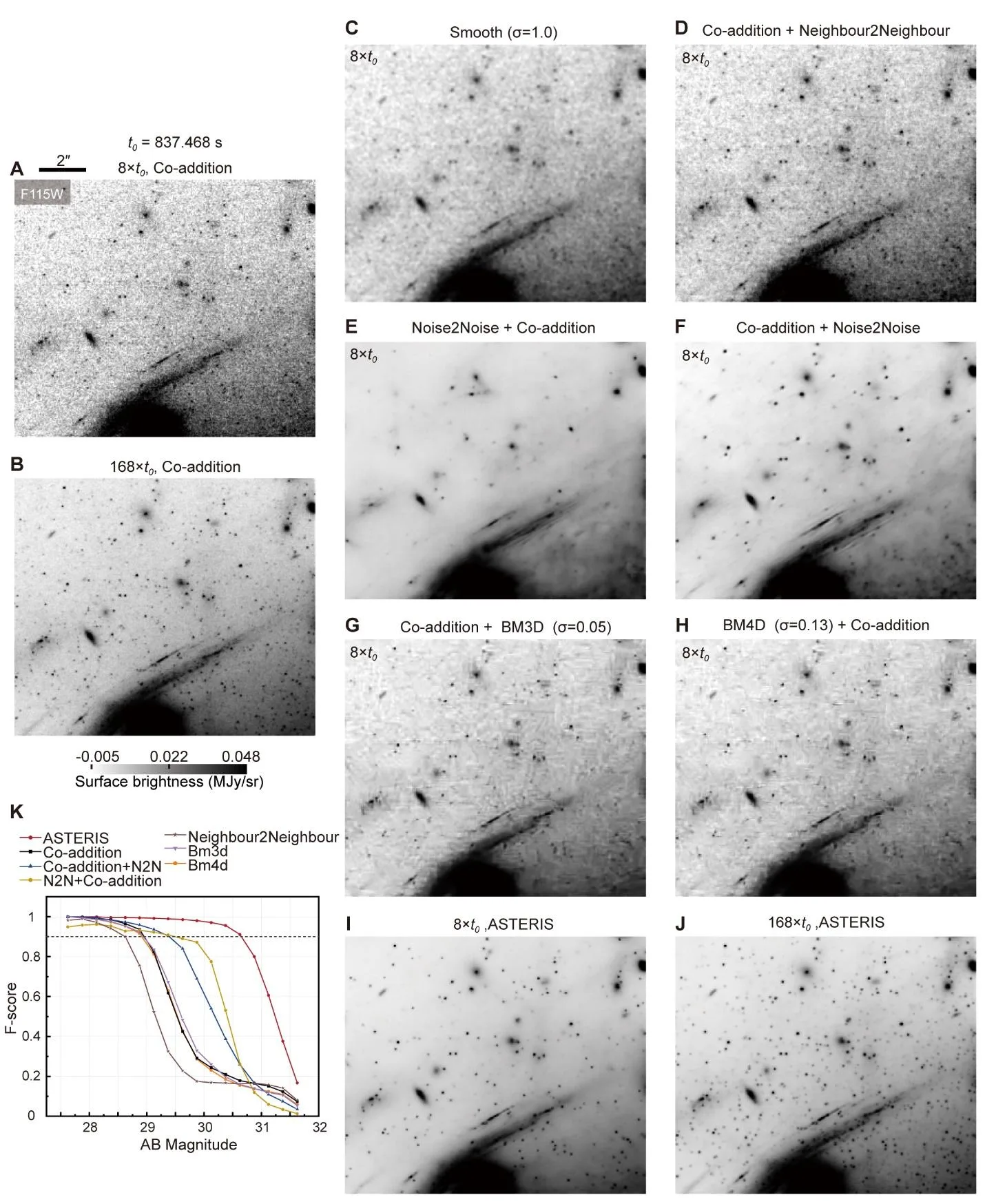
The night sky in a telescope image looks like a photo taken through a fogged-up window: bright stars are visible, but everything faint drowns in a murky haze. That haze is noise — random interference from electronics, heat, and the atmosphere itself. Some of the noise repeats from image to image, like a scratch on the glass, and it can be calculated and removed.
The ASTERIS algorithm does exactly that. It scans many images of the same patch of sky taken at different times and learns to tell the real light of distant objects from repeating interference. Like an experienced restorer who knows which spots on an old painting are dirt and which are the artist's intent, the algorithm cleans the image without touching the stars and galaxies themselves.
Tests on real images from the James Webb Space Telescope and the ground-based Subaru telescope confirmed the method's power. The algorithm revealed barely visible structures in galaxies and arcs created by gravitational lensing — when a massive object bends the light of a distant galaxy like a lens. And in deep Webb images, ASTERIS found three times more galaxy candidates with redshift greater than 9 than previous methods. These are galaxies whose light has traveled for more than 13 billion years — almost from the beginning of time.
Now astronomers can peer even deeper into the universe's past without waiting for more powerful telescopes. All it takes is smart cleaning of existing data, and the foggy glass becomes clear.
One stellar magnitude is a brightness difference of about 2.5 times. An improvement of one magnitude lets you see objects that were previously hidden in noise, as if the telescope had become significantly larger.
In Carl Sagan's novel Contact, the protagonist hears a signal from space hidden in noise. ASTERIS does something similar, but for images: it pulls a faint signal out from under a mountain of interference.