Microquasar Cygnus X-3: The PeVatron Powering the Cygnus Bubble ✛ ✎ ✦
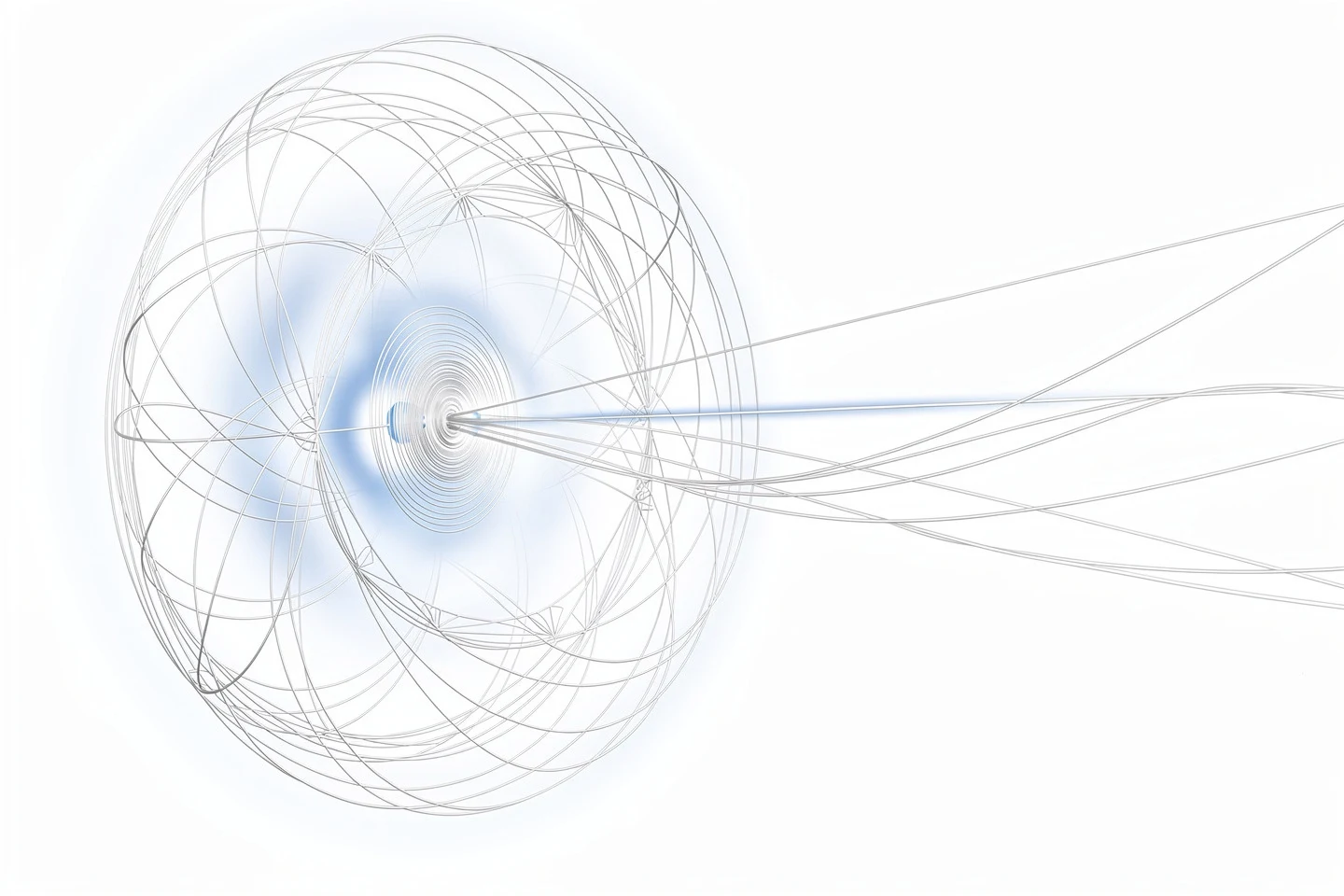
For a long time, astronomers searched for the 'factories' of the most energetic cosmic rays — particles that carry the macrocosm compressed to the size of an atomic nucleus. Colossal star-forming regions like Cygnus OB2, where winds from young giants collide, were prime suspects. But nature, like a magician, hid the accelerator's heart elsewhere — inside a tight binary system. Here, a black hole (or neutron star) ticks with a 4.8-hour rhythm, like a metronome in a cosmic orchestra. This object, Cygnus X-3, turned out to be a microquasar — a tiny 'heart' whose beats over millennia have pumped energy into the surrounding interstellar gas, creating a glowing gamma-ray bubble spanning twelve full moons across.
Picture a living organism: the heart pumps blood, which carries oxygen throughout the body. So it is with Cygnus X-3: with each orbital cycle, its relativistic jets inject batches of protons into space. Accelerated to nearly 10 PeV, they act like red blood cells, delivering energy to the far corners of the Bubble. Over hundreds of thousands of years, these particles diffused tens of parsecs, colliding with gas atoms to produce gamma-ray photons via pion decay. Thus formed the Cygnus Bubble — a giant halo shining not from the source's own activity, but from the echo of its centuries-long pulse.
Numerical simulations confirm this picture, needing only a drop of efficiency: less than 3% of the jet energy goes into proton acceleration. Moreover, particle scattering near the source is anomalously slow — the diffusion coefficient is orders of magnitude below the galactic background. Like thick blood pooling around the heart; here, the plasma, stirred by the accelerator, suppresses turbulence, delaying diffusion and making the halo brighter. This effect was predicted long ago, but only now has it surfaced in the data, revealing a unique 'trap' for cosmic rays.
This discovery isn't just a relabeling. It revolutionizes the evolution of the Galaxy. If microquasars can be PeVatrons, injecting particles of ultimate energies into the interstellar medium, then our galactic landscape is shaped not only by supernova explosions. It is carved by the ticking of hundreds of such 'hearts.' Future Cherenkov telescopes like CTA will scan this pulse with unprecedented resolution and may isolate the compact core, showing precisely where the cosmic rhythm beats.
Cygnus X-3 is one of the brightest X-ray sources in the sky, and its 4.8-hour 'heartbeat' puzzled astronomers for decades. Only the ultrasensitive LHAASO observatory could catch the same pulse in gamma rays, confirming that it's a binary system with a compact object — a true cosmic pacemaker.