Microquasar Cygnus X-3 as a Pevatron powering the Cygnus Bubble ✛ ✎ ✦
Context
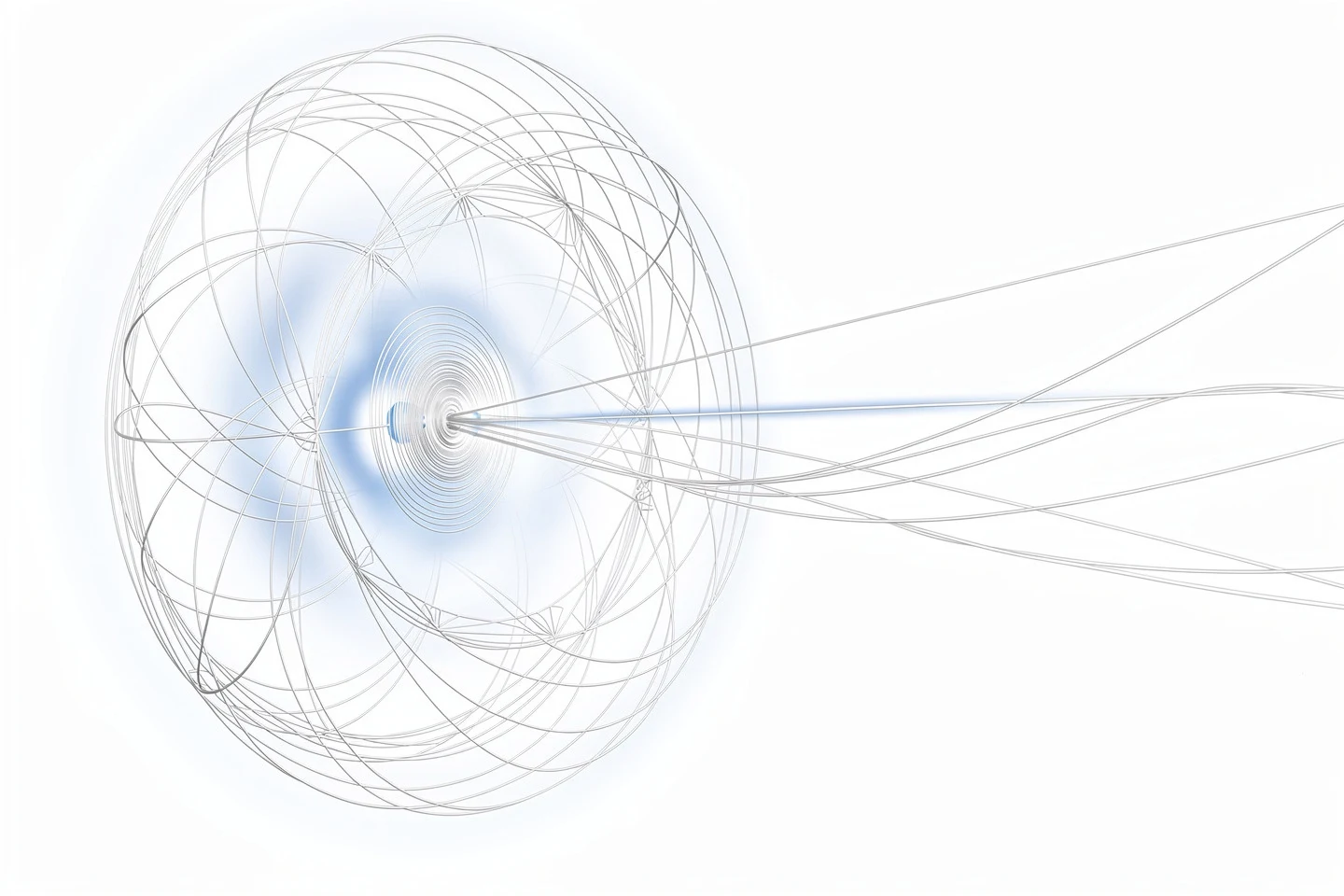
Identifying galactic accelerators capable of boosting cosmic rays to PeV-scale energies (Pevatrons) is one of the key goals of modern astrophysics. The detection of dozens of extended ultra-high-energy gamma-ray sources by the LHAASO collaboration hinted at the existence of many such objects, but pinpointing the exact acceleration site is tricky due to overlapping emission from different regions. The microquasar Cygnus X-3, a binary system with a black hole (or neutron star) surrounded by an accretion disk and launching relativistic jets, exhibits gamma-ray variability with the orbital period. This offers a unique opportunity to "see" both the compact accelerator and its extended gamma-ray halo, which is thought to have already been detected as the Cygnus Bubble.
Methods
To test the hypothesis, the researchers built a numerical model of proton diffusion, continuously injected from Cygnus X-3, accounting for a realistic gas distribution in the interstellar medium. The transport equation was solved analytically for ultrarelativistic protons experiencing collisional losses in the plasma. The spatial diffusion coefficient was parameterized as D(E)=D₀(E/1 PeV)^δ with Kolmogorov (δ=1/3) and Iroshnikov–Kraichnan (δ=1/2) turbulence spectra. The gas distribution was modeled as uniform or with an exponential fall-off in density away from the Galactic plane. Gamma-ray emission from neutral pion decay was calculated using the aafragpy package, and the integrated flux was compared with LHAASO data.
Results
The model successfully reproduces both the total gamma-ray flux above 400 TeV within a 6° radius around Cygnus X-3 and the radial intensity profile. Achieving agreement required a diffusion coefficient at 1 PeV of D₀ ≈ 3×10²⁹ cm²/s, which is one to two orders of magnitude below the extrapolation of the Galactic average, but consistent with the expected suppression of diffusion near powerful accelerators due to self-modulation of turbulence. For a jet kinetic luminosity of the source of 5×10³⁹ erg/s, the required proton acceleration efficiency up to 10 PeV is 0.7–1.6% for uniform gas and 1.6–3.2% for non-uniform gas, posing no energetic difficulty. Importantly, accounting for the formation of a cavity around the source swept out by cosmic ray pressure only weakly affects the results due to the large size of the emitting region.
Implications
If the interpretation is correct, the Cygnus Bubble is no longer associated with the star-forming region Cygnus OB2 at energies above 400 TeV and becomes the largest known halo of a microquasar. This means that Cygnus X-3 is a "dual" accelerator: a compact region within the orbit generates modulated PeV emission, while the large-scale jet may be responsible for TeV-range particles. Similar duality is observed in other microquasars, such as SS 433. The established link between a point-like injector and an extended gamma-ray source provides a new method for identifying Pevatrons—through their diffuse gamma-ray halos.
Future development
Future observations with next-generation Cherenkov telescopes, such as CTA, ASTRI, and LACT, which have angular resolutions better than 0.05°, will resolve the morphology of the Cygnus Bubble. At the highest energies, the size of the emitting region is expected to shrink, pointing to a point source. Spectroscopic measurements and gamma-ray background mapping will help definitively separate the contributions of Cygnus X-3 and the nearby Cygnus Cocoon.
Impact
The results impact the physics of accretion disks and jet outflows in X-ray binaries, the theory of cosmic ray diffusion in a turbulent interstellar medium, and the interpretation of gamma-ray observatory data. Rethinking the nature of the Cygnus Bubble will influence models of galactic evolution and the energy budget of cosmic rays.
Next steps
The key next step is conducting deep morphological observations with CTA to isolate a compact core at the position of Cygnus X-3. Additionally, refining the gas distribution along the line of sight via radio observations will be necessary, as well as accounting for transitions in particle scattering regimes in modeling.
Key open problems
The work is directly linked to two fundamental problems in astrophysics: the origin of Galactic cosmic rays at the highest energies and the nature of Pevatrons. Demonstrating that a microquasar can be a super-Pevatron broadens the class of possible accelerators beyond supernova remnants. It also raises the question of why diffusion is suppressed near accelerators—this remains one of the unsolved problems in plasma physics and the interstellar medium.
The knowledge machine's view
This section is addressed to the author of the paper and their colleagues. Neighbouring works were found by meaning-based search across our archive, not by word overlap. We do not review: we show the field around the work.
What the work does
The study presents a numerical model of proton diffusion from the microquasar Cygnus X-3, accounting for a realistic gas distribution. An analytical solution to the transport equation and calculations of gamma-ray emission from pion decay allowed the authors to reproduce the flux and radial profile of the Cygnus Bubble as observed by LHAASO. The results show that the observed gamma-ray halo can be explained by the acceleration of protons to PeV energies in the source's jets.
Where its strength is
The strength of this work lies in using the orbital modulation of Cygnus X-3 as a unique tool to isolate the contribution of a compact accelerator against the extended halo. The derived suppression of the diffusion coefficient near the source is consistent with the idea of self-modulated turbulence, making the model self-consistent.
Where it could go next
- It might be interesting to compare the obtained constraints on proton acceleration efficiency with hybrid PeVatron models that accelerate both protons and electrons. In our archive, there is an analysis of a work considering a hybrid scenario for a source in Cygnus.based on: PeVatron's Hybrid Orchestra: A Particle Symphony at the Edge arXiv:2606.06974v1
- Since Cygnus X-3 is also a neutrino source, one could check how the model's predictions align with data from neutrino telescopes. The archive contains quick reviews discussing the connection between black holes and neutrino generation.based on: Black Holes: Neutrino Factories arXiv:2607.27658v1
- To test the universality of the proposed diffusion suppression mechanism, it would be useful to apply the model to other microquasars with observed gamma-ray halos. Nearby in the archive, there is a work discussing record-energy photons from a binary system, which could provide additional observational constraints.based on: Record-breaking photons are born in the shadow of a binary star arXiv:2603.27805
Worth trying
- Use LHAASO data on other sources in the Cygnus region to test whether a neighboring PeVatron, such as the hybrid source discussed in the archive, contributes to the observed emission.
- Estimate the expected neutrino flux from Cygnus X-3 within the model and compare it with the sensitivity of IceCube-Gen2.
- Investigate how the diffusion suppression changes when accounting for the non-stationary injection related to the orbital motion.
Nearby works in our archive
- Record-breaking photons are born in the shadow of a binary starsimilarity 0.60
- A Chick in a Dust Shell: How a Red Quasar Emergessimilarity 0.59
- Red Dots: The Universe's Neutrino Cannonssimilarity 0.58
- Cosmic Cannons: How Black Holes Accelerate Particles to Unimaginable Speedssimilarity 0.58
- Black Holes: Neutrino Factoriessimilarity 0.58
- Breath of a Quasar: How a Black Hole Controls a Clustersimilarity 0.58
- PeVatron's Hybrid Orchestra: A Particle Symphony at the Edgesimilarity 0.57
The archive is sparse around this work: the closest review is only 0.60, against a usual 0.64. It looks like few have drilled nearby.
Cygnus X-3 is one of the brightest X-ray sources in the sky, discovered back in 1966. Its peculiar behavior, including periodic radio flares with a period of 4.8 hours, long baffled scientists. Only recent LHAASO observations managed to catch the gamma-ray modulation with the same period, unequivocally pointing to a compact binary system as the accelerator.
Key numbers
- distance to Cygnus X-3: 9.67 kpc
- angular radius of the Cygnus Bubble: 6°
- proton cutoff energy: 10 PeV
- diffusion coefficient at 1 PeV: 3×10²⁹ cm²/s
- acceleration efficiency: 0.7–3.2%