Breast cancer is a malignant tumor that originates in the cells of the breast, most commonly in the ducts or lobules. It is one of the most frequently diagnosed cancers worldwide and a leading cause of cancer death among women. Early detection through imaging techniques like mammography, MRI, and ultrasound significantly improves outcomes, and treatment often involves surgery, radiation, chemotherapy, or targeted therapies.
History
Breast cancer has been recognized since ancient times, with the earliest descriptions found in Egyptian papyri. The modern understanding of its biology and treatment evolved in the 19th and 20th centuries, with advances in surgery, radiation, and systemic therapies.
How it works
Breast cancer develops when geneticmutations in breast cells cause uncontrolled growth and division. These cells can invade surrounding tissue and spread to other parts of the body through the lymphatic system or bloodstream. Imaging techniques detect tumors by visualizing differences in tissue density, blood flow, or metabolic activity. For example, MRI can reveal tumor margins and vascularity, while specialized imaging like microwave tomography exploits differences in dielectric properties between healthy and malignant tissue.
In practice
Breast cancer research drives the development of imaging tools like MRI and microwave tomography for tumor detection, as well as genetic tests that predict disease progression and guide personalized treatment.
Fun fact
The article 'Диагноз без линз: рак груди видно по теням' describes how subtle shadows in imaging can reveal breast cancer without the need for traditional lens-based optics.
An ordinary flashlight emits light whose waves oscillate in all directions at once. But pass that light through a special filter, and you get a beam that oscillates strictly in one plane: that's polarized light. When such a beam travels through biological tissue, the tissue's internal structure slightly alters the orientation of the oscillations.
Genes are like houses in a city: in some, life bustles; in others, silence reigns. This 'urban' genetic landscape was analyzed in a thousand women with breast cancer.
Ultrasound waves bounce off organs to draw their outlines, but on an ovarian scan it's hard to tell a harmless fluid-filled cyst from a solid cancerous mass. Even specialists draw the boundaries differently, and this directly affects treatment choices.
The OvAi Focus program tackles this by learning from thousands of examples.
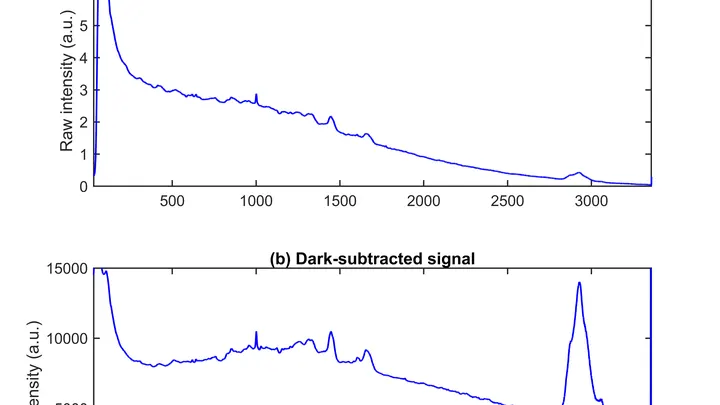
A drop of blood from a vein falls under three beams, and each one drags its own clues into the light. The infrared beam makes molecules vibrate — from that trembling, you learn how much sugar and fat is in the sample. A green laser scatters off proteins and lipids, shifting color — revealing the remodeling of cell membranes.
A tongue tumor is like a stranger in a crowd. On the surface, they all look much alike, but beneath the surface hide very different personalities. Some tumors behave aggressively, others grow slowly. Doctors need to understand who they're dealing with before surgery.
Usually, this means taking a tissue sample — a biopsy.
A surgeon removes a breast tumor, but how do you know no cancer cells are left at the edge? Right now, the tissue goes to a lab, and the answer comes back days later. If the margin is not clean, a second surgery is needed. The new method promises to give the answer right in the operating room, while the patient is still on the table.
In a hospital, blood from a finger prick usually goes to the lab, and the result comes back the next day. The new method promises to cut that wait to a few minutes. Instead of catching light reflected off a sample, it reads the electrical voltage that arises at the boundary between two media, like the faint tingle you feel when you touch a battery with wet fingers.
PET/CT is like a map where cancer cells light up as bright spots. But what if the map is blank and the disease is still hiding somewhere? In 132 men with recurrent prostate cancer, doctors found no glowing lesions, but they decided to study the texture of the scan itself, like an experienced tracker noticing bent grass where an animal has passed.
A tumor doesn't stay put. Individual cells or whole groups break off and set off on a journey through the body. Some crawl solo, like scouts; others stick together, like a flock. Scientists built a computer model to understand how these cells pick a direction.
In the model, cells respond to two signals.
In a dark room, on a table, sit a laser pointer, a piece of glass with tissue, and an ordinary phone camera. Light passes through the sample, and the image shows not cells but a pattern of bright and dark stripes, like the shadow of leaves on a wall.