A satellitegalaxy is a smaller galaxy that orbits a larger one, held by the larger galaxy's gravitational pull. The most familiar example is the Milky Way's own companions, such as the Large and Small Magellanic Clouds, which are visible to the naked eye from the Southern Hemisphere. These systems are not just cosmic curiosities — they are natural laboratories for studying how galaxies form, evolve, and interact.
History
The concept of satellitegalaxies became clear in the early 20th century as astronomers realized that some nebulae were actually separate galaxies. The Magellanic Clouds were known to ancient navigators, but their true nature as galaxies was established in the 1910s–1920s.
How it works
The larger galaxy's gravity dominates the region, pulling the smaller galaxy into an orbit. Over time, tidal forces can distort the satellite's shape, stripping away stars and gas, and sometimes triggering bursts of star formation. The satellite's motion and internal dynamics reveal the mass distribution of the larger galaxy, including its dark matter halo.
In practice
Studying satellitegalaxies helps astronomers map dark matter, test models of galaxy formation, and understand how small galaxies are disrupted and absorbed by larger ones.
Fun fact
The Milky Way has more than 50 known satellitegalaxies, and many of them are so faint that they were only discovered in the last two decades with sensitive digital surveys.
In 2034, a rocket leaves a spaceport with an unusual payload: two spheres the size of a large globe, each weighing nearly a ton. No engines, no electronics. Just a mirrored surface of hundreds of corner-cube reflectors — tiny prisms that return light exactly to where it came from. This is the future space tuning fork.
The formation of the Milky Way is a grand cosmic performance, in which mergers of satellite galaxies were woven into a single score. Each event left a trace in the dynamics and chemical composition of stars, much like notes capture the composer's intent.
The gravitational dances of celestial bodies long remained silent to astronomers. We learned to catch the shadows of planets against stars with the transit method — a breakthrough that delivered thousands of worlds thanks to William Borucki and his Kepler telescope.
Dwarf galaxies orbiting the Milky Way look as if they’ve survived a gravitational storm. Their stellar bodies are stretched, scattered by tidal tails, and heated from within.
Remember the sensational comet 1I/‘Oumuamua — the first object to come to us from another star? Its hyperbolic trajectory left no doubt: it was a wanderer from the interstellar void. But astronomers wondered: could some of these visitors not be strangers at all, but our own, escaped from the Solar System millions of years ago?
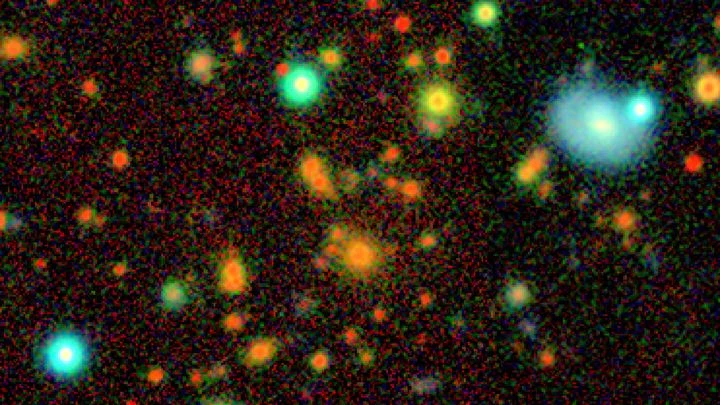
In galaxy clusters, invisible dark matter serves as the framework holding star systems together. Its shape is betrayed by a faint glow — stars ripped from galaxies by tidal forces. This stellar 'broth' fills the cluster like a liquid taking the shape of its container: it envelops the clumps of dark matter, creating a precise cast of their outlines.
A galaxy cluster's gravity warps spacetime, acting like a colossal lens: it focuses and amplifies light from distant objects, as predicted by Einstein. Such lenses are rare, but they let us glimpse what lurks at the edges of the cosmos.
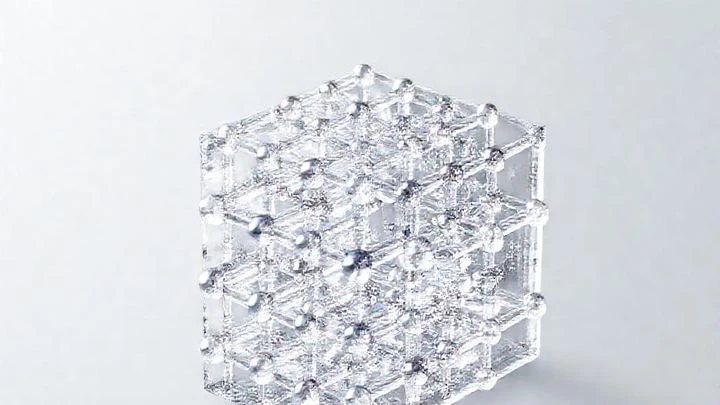
Throw pebbles along a tight row of posts: they ricochet into a dense spray. Throw at an angle, and they scatter. Gamma rays in a crystal do the same: they spawn particle cascades that spread out unless the crystal’s atomic rows are perfectly aligned. Align them within a hair’s width, and the cascade sharpens into a tight beam. A small crystal then outperforms a large one.
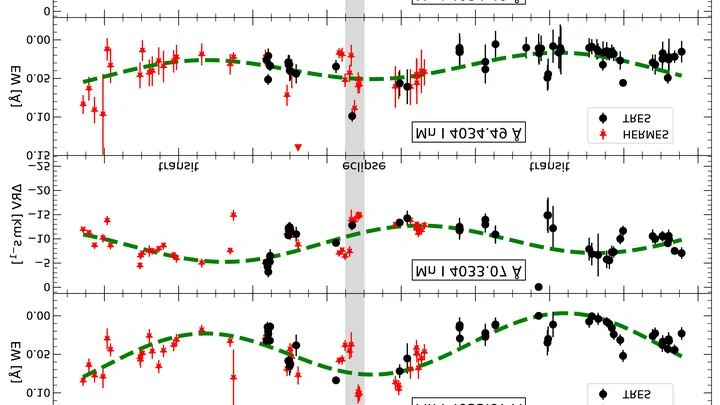
Betelgeuse is a giant star ready to explode as a supernova. But it may not be alone: a small companion star, Sivarkha, circles in a tight orbit. Every 2000 days, it plunges through Betelgeuse’s outer layers, like a boat cutting through water, leaving waves of superheated gas.