Phase noise is a measure of the short-term frequency stability of a signal, expressed in dBc/Hz at a given offset from the carrier frequency. It describes how much a signal's phase (and therefore its frequency) fluctuates over very short timescales. In any real oscillator, the output is not a perfect single frequency; it has a 'skirt' of noise around the carrier, and phase noise quantifies the power in that skirt relative to the carrier power, in a 1 Hz bandwidth, at a specific frequency offset.
History
The concept was formalized in the mid-20th century with the development of radar and microwave communications, where frequency stability became critical. Key contributions came from researchers like W. A. Edson and later D. B. Leeson, whose model (1966) remains a standard for understanding oscillator phase noise.
How it works
Phase noise arises from random fluctuations in the phase of an oscillator's output, caused by thermal noise, shot noise, and other stochastic processes in the active and passive components. These fluctuations spread the signal's power from the ideal single line into a continuousspectrum. The measurement involves comparing the signal to a reference or using a phase detector to isolate the phase fluctuations, then analyzing their spectral density.
In practice
Phase noise is critical in radar systems, high-speed digital communications, and precision timekeeping. Low phase noise oscillators are essential for accurate GPS, satellite communication, and the synchronization of large arrays like the Event Horizon Telescope.
Fun fact
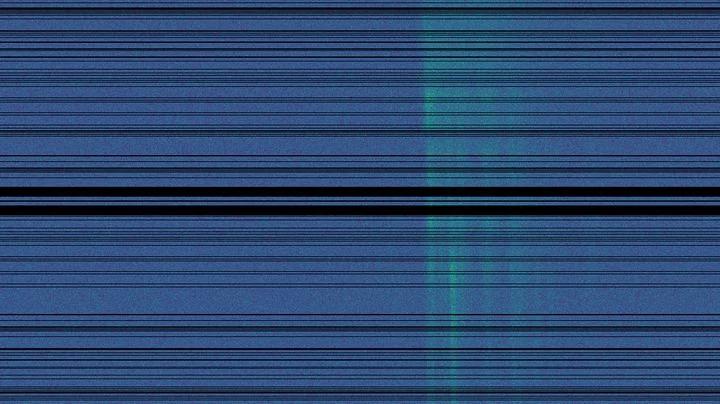
The 'ringing' of a radiosignal from space, as described in the article 'Радиосигнал из космоса зазвучал как колокол', is essentially a manifestation of phase noise in the signal's source, revealing the internal dynamics of a neutron star or pulsar.
A light field, like a neat waffle iron, presses a regular pattern of bright and dark regions into space. Atoms get stuck in the brightest spots as if in tiny dimples: that's an optical lattice. It's a favorite tool for physicists who want to study quantum behavior of matter in its pure form.
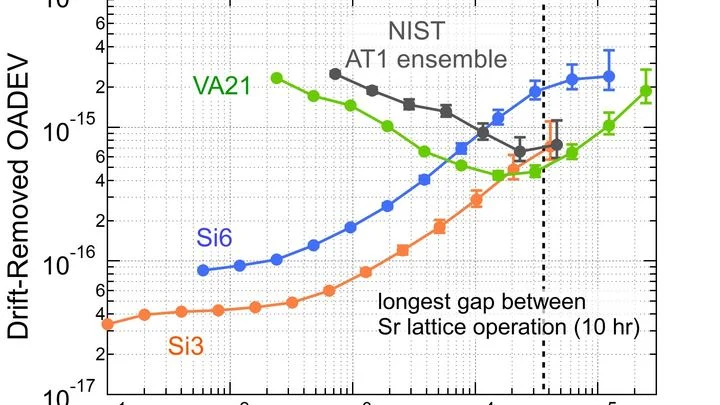
The world's most precise stopwatch still runs with one eye on an old pendulum. Hydrogen masers — the best radio-frequency flywheels (devices that keep the rhythm between comparisons with a reference)—accumulate error because noise between ticks leaks into the final signal.
Plasma is not just hot gas; it's an entire orchestra of charged particles, each group playing its own part. Heavy ions (atoms that have lost electrons) set the slow rhythm, while light electrons dart around ten thousand times faster.
A laser is like a tuning fork that rings at a single note. But even in complete silence, its sound trembles slightly. Previously, it was thought that this tremor, random kicks from spontaneous emission of light by atoms inside the laser, was the main limit to precision.
Two dead suns circle in an eternal dance. Their orbit is a perfect metronome, keeping time with the accuracy of atomic clocks. But even dead stars can tremble.
Gravitational-wave observatories are like a keen ear listening for distant rumbles of cosmic catastrophes. To catch the faint whisper of merging black holes, detectors of gravitational waves use specially prepared light — known as squeezed vacuum.
A pot of water sits on the stove. When the water boils, it suddenly turns into steam: that's a phase transition. In the first moments after the Big Bang, the Universe underwent something similar, but it wasn't liquid and gas that changed, but fundamental fields.
Atomic clocks are pendulums that tick at the frequency of light. Inside a trap, an aluminum ion hangs, and a laser probes it like a tuning fork. If the laser's frequency matches the atom's natural frequency, the atom responds. The clock's rate is checked against this response.
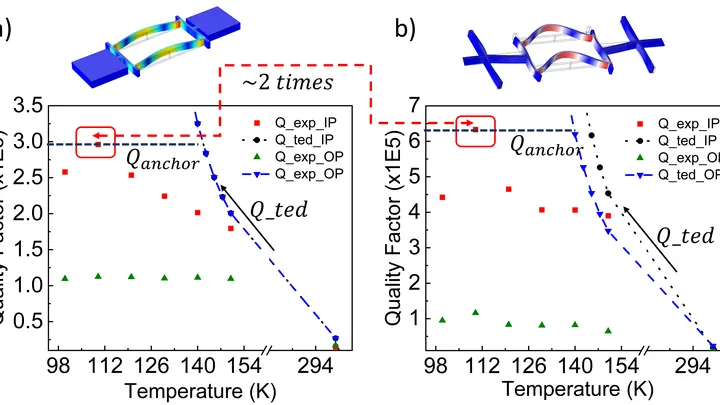
Sound in a solid is waves of compression and rarefaction rippling through atoms, like ripples across a spring mattress. If you place obstacles with just the right spacing, waves at certain frequencies can't pass: they bounce back. Such a periodic structure is called a phononic crystal, and it works for sound the way a multilayer mirror works for light.
You are counting sand grains falling in an hourglass, but each time the wind adds or removes a few. In the most sensitive cameras, the task is similar: you need to figure out how many "sand grains" (electrons) the sensor itself added, and how many came from light. This inherent sensor noise is called readout noise, and it hinders seeing weak signals — for example, the light of a distant star.
A laser beam usually quivers slightly, like a plucked string. In optical clocks, that quiver turns into timing errors. Engineers swapped the shaky light for steady light, and rubidium vapor clocks started ticking five times more evenly.
A microwave signal that doesn't jitter from interference is needed in both radar and telecommunications. Until now, a clean signal was obtained on bulky setups where lasers and resonators sat on an optical table. Now engineers have packed everything into a box the size of a cup—166 milliliters.
In a plasma accelerator, particles are accelerated like surfers riding a wave created in the plasma. If the leading bunch and the trailing bunch are not aligned, an instability arises that shakes the trailing bunch. It's as if a surfer on a wave starts wobbling from side to side: their trajectory gets messed up, and they might fall off the wave.
Short, powerful bursts of radio static from deep space have long puzzled scientists. Their source is believed to be the ultra-dense cores of dead stars, where magnetic fields are unimaginably strong.
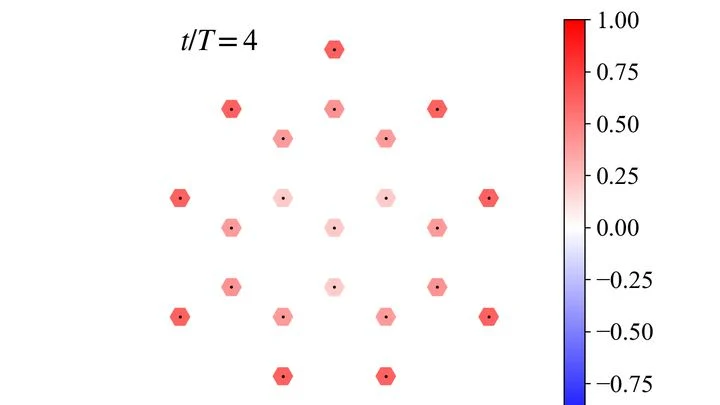
In the quantum world, noise usually destroys orderly behavior, like random jolts damping a pendulum. But on IBM quantum processors, physicists discovered the opposite: structured noise can prolong and even create rhythmic oscillations. It's like a pendulum that swings harder from seemingly chaotic yet internally synchronized pushes.