q-bio.CB q-bio.CB

48 articles

articles

q-bio.CB2026-01-012 minarXiv:2601.00374express
How Cells Choose Their Own Leaders
In the first weeks of an embryo's life, a dense crowd of cells crawls across its body. These cells will later form the facial bones, parts of the heart, and nerves. The crowd doesn't move randomly: a few leader cells take the front, and the rest follow them, like cyclists in a peloton. For a long time, it was believed that leaders are a special breed of cells, born with a drive to lead.
q-bio.CB2026-01-072 minarXiv:2601.90001
How a Short Course of Immunotherapy in Middle Age Extends Healthy Life in Mice
An immune sentinel that briefly loses its vigilance, then goes back to hunting down senescent cells. That is one way to describe what happens in the bodies of mice after a short course of an antibody against GD3. At 18 months, when the animals had already accumulated age-related changes, they received this antibody for three months.
q-bio.CB2026-01-133 minarXiv:2601.90003
Taming a stubborn orchestra: how to make aging cells play more quietly
In the aging orchestra of the body, every musician once played their part precisely. With age, some musicians do not leave the stage but stay and start playing out of tune, and so loudly that they drown out their neighbors.
q-bio.CB2026-02-082 minarXiv:2602.08008express
How tumor cells wander through the brain's maze
A brain tumor is like a traveler trudging through a dense forest: trees and bushes are the different types of brain tissue, some easier to traverse than others. Glioma cells don't move in a straight line; they constantly loop around, bumping into obstacles and going around them.
Statistical Mech2026-02-122 minarXiv:2602.11813express
How Cancer Chooses Its Path
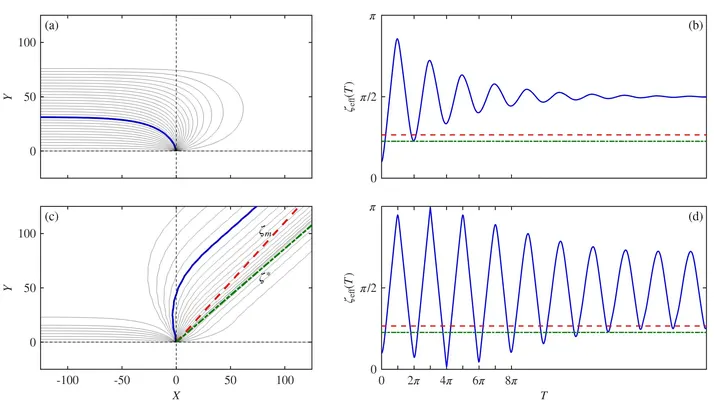
A tumor doesn't stay put. Individual cells or whole groups break off and set off on a journey through the body. Some crawl solo, like scouts; others stick together, like a flock. Scientists built a computer model to understand how these cells pick a direction. In the model, cells respond to two signals.
q-bio.CB2026-02-232 minarXiv:2602.90006
Annexin A1: the protein that makes immunity grow old
In the bone marrow, as in a barracks, there is a constant roll call. Rookie T cells wait for their first assignment, and for a while they all look alike. But with age, soldiers with a special mark on their uniform start to appear among them: the protein annexin A1. This mark is not a decoration but a brake shoe that keeps the cell from charging into battle.
q-bio.QM2026-02-281 minarXiv:2603.00678express
Genetic Precision Without Stability
You can edit a cell perfectly, and it still turns out useless. The gene is fixed exactly as planned, yet the cell behaves unpredictably: it drifts, changes fate, loses safety. It's like fixing one gear in a watch, but the watch still runs wrong because the whole mechanism is out of sync. Previously, a cell was viewed as a list of independent parts.
q-bio.CB2026-02-281 minarXiv:2603.00834express
How Skin Cells Close a Wound: A Dance of Division and Movement
When you cut your finger, skin cells start working in concert: some divide, others crawl toward the wound, and still others pause. But exactly how a cell decides what to do next depends on its internal "schedule"—the cell cycle.
A Single-Celled Lens: How an Alga Confuses Light and Shadow
The tiny green alga Chlamydomonas spends its life rowing with two flagella toward light, like a swimmer heading for shore. It senses light with a photoreceptor protein, and behind it lies a red spot — the 'eyespot'—which casts a shadow and helps the cell figure out where the light is coming from.
q-bio.CB2026-04-152 minarXiv:2604.90003
A Brake for the Aging Engine
In an engine running at full throttle, the pistons wear out over time. In a young body, that engine is the IGF-1 signaling pathway, which drives cells to grow and divide. But in old age, the same mechanism no longer repairs; it accelerates wear. It's like a gas pedal that should be eased off in old age. Scientists have long suspected that gently slowing this pathway in adults could extend healthy life.
q-bio.QM2026-04-172 minarXiv:2604.16642express
Cells Huddle Together or Scatter
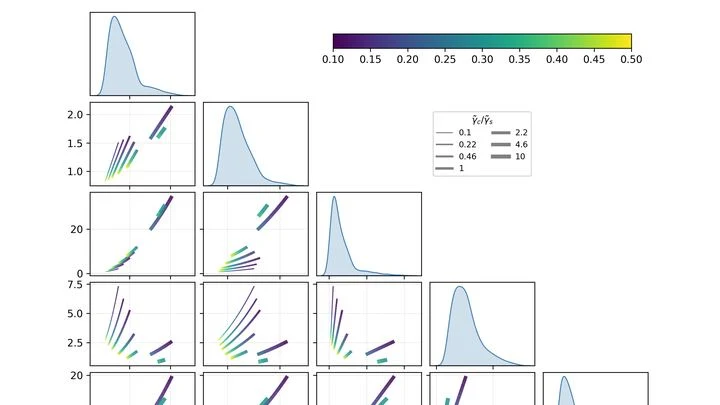
An orchestra without a conductor. Each musician plays their own part, and the overall volume builds, but the melody falls apart — violins rush ahead, brass lags behind. Cells behave much the same way when their DNA is modified: they may shift, but some move far, while others stay put.
q-bio.CB2026-04-201 minarXiv:2604.17786express
How Sentinel Cells Build a Trap for Cancer
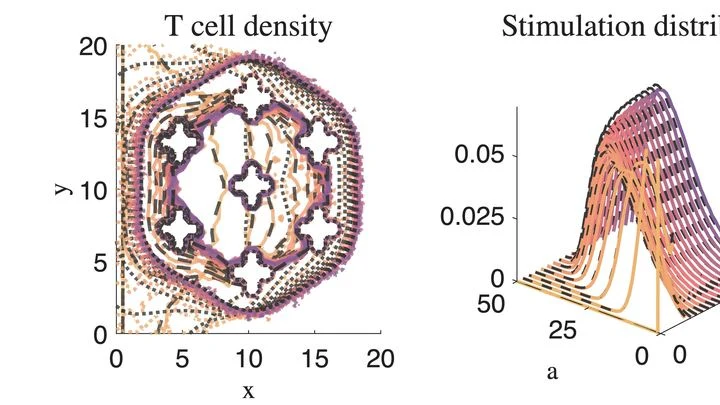
A lymph node is like a bustling command center. Here, dendritic cells, scouts that collect enemy debris, show T cells (the soldiers) fragments of invaders. If scouts stand alone, soldiers pass by barely noticing the signal. But when scouts huddle into tight groups, it's as if they light bonfires: the signal becomes brighter and more insistent.
q-bio.CB2026-04-212 minarXiv:2604.90001
The Conductor Who Got Tired: How a Breakdown in RNA Processing Extends a Worm's Life
In the orchestra of the cell, every RNA has its own part. Some molecules deliver instructions from genes to ribosomes, while others help snip out the extra bits from those instructions. The conductor of this orchestra is a protein complex called Integrator. It gives the signal when it's time to stop making small RNAs. Scientists decided to see what would happen if the conductor got tired.
Biological Physics2026-04-231 minarXiv:2604.21655express
Spores as Seeds: How to Bring Order to a Bacterial Colony
If you scatter seeds haphazardly, the seedlings will tangle into chaos. But if you lay them out in neat rows, the field will grow in an orderly fashion. A similar principle works with bacteria. Colonies of elongated cells usually churn with disordered flows, but scientists have found a way to impose order from the very start.
q-bio.CB2026-05-042 minarXiv:2605.90001
How to Switch Off the Alarm System of Aging Cells
In a house where no one has done repairs for years, old junk doesn't just take up space. It starts to smell, shed dust, and spoil the air for everyone living there. Senescent cells behave much the same way in our bodies: they can no longer divide, but they reliably broadcast inflammatory signals around them, accelerating the aging of neighboring tissues.
q-bio.CB2026-05-203 minarXiv:2605.90003
How Neighboring Cells Squeeze Out Senescent Cells
On a packed bus, passengers instinctively edge away from the person who has taken up too much space or is acting strangely. Something similar happens in the body's tissues: when a senescent cell, one that has stopped dividing but hasn't died, appears among normal cells, its neighbors begin to crowd it.
q-bio.CB2026-07-101 minarXiv:2607.09296express
Two Cell Types Move in Sync
A colony of cells resembles a squad blazing a trail through unknown terrain. In living tissue, this role is often played by chemotaxis — movement along a gradient of a chemical that the cells themselves secrete. Earlier models described homogeneous groups, but in reality, different cell types interact.
q-bio.CB2026-07-172 minarXiv:2607.90001
The youth that survived a transplant
Blood stem cells are like spare keys to a house: they open the door to any room, but over time they wear down and start to stick. In an elderly person, such keys handle the locks worse, and the blood renews itself more slowly. Scientists have long been searching for a way to make a duplicate that stays new even after heavy use.
q-bio.GN2026-07-192 minarXiv:2607.17227express
Cellular Atlases: Who Reads the Language of Tissue Best
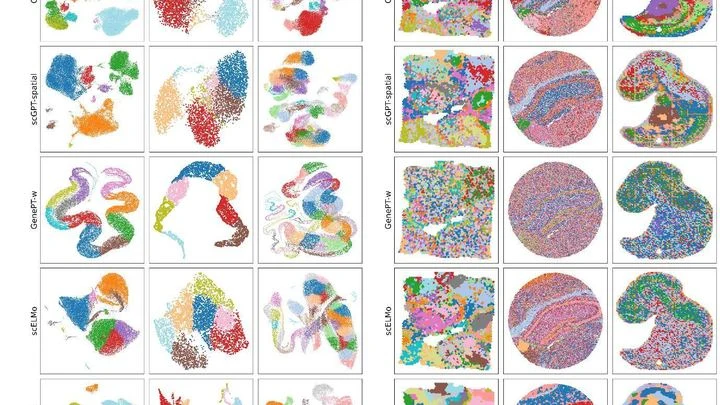
Biologists are increasingly trusting computers to read the "user manuals" of living cells. Six recent AI models (Nicheformer, CellPLM, scGPT-spatial, GenePT, scELMo, and Novae) are like six translators working from different dialects of the same cellular language.
q-bio.CB2026-08-011 minarXiv:2608.00846express
How a Cell Chooses Its Path: A View Through the Noise
A Dictyostelium amoeba crawls across glass. Its path is recorded — a chain of points on a plane. But what forces are pushing it? Inside the cell, a molecular motor works: proteins pull, the membrane springs, water presses.
Signal Processing2026-08-021 minarXiv:2608.01239express
A Chip That Listens to Cells Building a Barrier
Blood vessel cells were seeded onto a transparent film just 700 nanometers thick — a hundred times thinner than a human hair. Flat electrodes are hidden beneath the film. They send a weak alternating current and listen as the resistance changes.
Biological Physics2026-08-092 minarXiv:2608.08816express
The Boundary Sees All Better
If a smell seeps into a room through a slightly open door, you could stand in the middle and sniff. But the most accurate way to catch the moment the smell arrives is to stand right at the threshold. A cell behaves much the same way when it needs to measure the concentration of a substance around it.
Four Conductors of the Cellular Orchestra: How Epithelium Chooses Its Path to Fluidity
Epithelium lines our organs like tiles on a floor. At rest, cells cling to each other, and the tissue is elastic. But during embryonic development, wound healing, or tumor growth, this layer begins to flow like thick honey. What exactly triggers such softening?
q-bio.CB2026-08-242 minarXiv:2608.90023
The Turncoat Cell: How an Artery Starts Building Bone
In the wall of every artery live cells whose job is to contract and relax, keeping the vessel in tone. But sometimes they forget their profession and start behaving like bone builders: they deposit calcium, turning an elastic tube into something brittle, rather like a shell.
q-bio.CB2026-08-243 minarXiv:2608.90035
Four Windows into the Cell: How to See Hydrogen Peroxide in a Living Embryo
The house where a cell lives has four rooms: mitochondria, the nucleus, the cytosol, and the plasma membrane. Until now we could only see that a fire had lit up somewhere, without knowing which room it was in. Now we have four windows, and each one shows its own part of the house.
q-bio.CB2026-08-252 minarXiv:2608.90003
How fruit flies extend lifespan by tuning the cleanup crew inside the cell's power plants
A fruit fly lives at the bottom of a test tube, and its cells operate like a city with millions of power plants. In each plant, that is, in each mitochondrion, cleanup crews work to break down damaged proteins. With age, the crews get tired, trash piles up, and the city starts to malfunction. Scientists decided to hire extra cleanup workers, but not ordinary ones: a special complex called ClpXP.
q-bio.CB2026-08-252 minarXiv:2608.90049
How T Cells Find Malaria in the Labyrinth of the Liver
A T cell wanders through the liver like a person without a map in a labyrinth. The infected cell is somewhere nearby, but there are no signposts. It used to be thought that immune cells sense a chemical trail from the parasite and head straight for it.
q-bio.CB2026-08-253 minarXiv:2608.90050
Smoldering Fuse in the Arteries: How HIV Accelerates Atherosclerosis
Inside the arteries of a person with HIV, a fuse smolders that does not go out even when the viral load is suppressed. That fuse is chronic inflammation, and a new study shows it is kept alive by a special kind of immune cell that processes vitamin A. Scientists from the Canadian CHACS cohort compared blood from 51 people with HIV on therapy and 63 people without HIV.
q-bio.CB2026-08-282 minarXiv:2608.27833
Why Cells Invade as a Stream or a Clump
The orchestra starts playing, but each musician has their own tempo. If everyone plays at roughly the same speed, the music flows in a continuous stream. But if one group of instruments plays noticeably slower than the rest, the sound gathers into a dense clump that slowly moves forward.
q-bio.CB2026-08-282 minarXiv:2608.90057
An Extra Chromosome: How the Brain's Orchestra Loses the Score
In an orchestra rehearsing a symphony, every musician must take their part on cue. If a violinist suddenly decides he's a cello, and a flutist starts playing the trumpet's part, the music turns into noise.
q-bio.CB2026-08-293 minarXiv:2608.90029
Smoke in Early Infancy Rewrites the Immune System for Years
In September 2020, the sky over Oregon turned orange with wildfire smoke. Fifteen infant rhesus macaques, born just a few months earlier, breathed that smoke for nine days straight, simply because they lived in outdoor enclosures. Four years later, their blood told a story no one expected to hear.
q-bio.CB2026-09-033 minarXiv:2609.03691
How Tissue Tears: A New Topological Operation in the Vertex Model
A sheet of paper tears where tension exceeds strength. Epithelium, the cell sheet lining our organs, behaves similarly, but until recently models could not show how tears appear in it. The classical vertex model describes tissue as a network of polygons tightly packed together and forbids cells from detaching.
q-bio.CB2026-09-073 minarXiv:2609.90026
Aging of sympathetic nerves: why male skin loses its innervation faster
In the aged skin of a male mouse, every third hair follicle is left without a nerve, like a house whose electrical line has been pulled away. The socket itself is intact: the neurons, tucked away in nerve ganglia along the spine, have not gone anywhere. They are alive and have no intention of dying.
q-bio.CB2026-09-072 minarXiv:2609.90043
The osmotic pump that sets nuclear size
In a yeast cell, the nucleus takes up about six percent of the volume, like a small ball in a room. A hundred years ago, biologists noticed that bigger cells have bigger nuclei, but why this is so remained a mystery. Some talked about protein motors, others about envelope tension, still others about shape.
q-bio.CB2026-09-082 minarXiv:2609.90028
The Hard Age of the Ovary: How Fibrosis Measures Reproductive Aging
An old mattress stops bouncing back: the filling clumps up, and the springs lose their resilience. The ovary changes with age in much the same way, except that instead of filling, stiff connective tissue grows inside it, and the role of springs is played by the cells that support the eggs.
q-bio.CB2026-09-102 minarXiv:2609.90002
Watchdogs That Forgot How to Bark: T Cells in Diabetes
A watchdog that yawns and turns away instead of barking at an intruder is a bad guard. That is roughly how CD8+ T cells behave in people with type 2 diabetes. These cells are professional killers: they patrol the body, find infected or cancerous cells, and destroy them. But in diabetes, something breaks in the recognition system itself, and the watchdogs stop recognizing the enemy.
q-bio.CB2026-09-103 minarXiv:2609.90037
The Whirlpool of Aging: How the ApoD Protein and the Nuclear Bridge SUN1 Pull Cells Under
Water in a sink spirals down the drain. A cell caught in the whirlpool of aging is much the same: it can no longer climb out, and every turn pulls it deeper. Scientists have found what sets this whirlpool spinning: the ApoD protein, which old cells release into their surroundings like a distress signal that actually drowns the neighbors.
q-bio.CB2026-09-132 minarXiv:2609.90063
The Brain That Rebuilds Itself Every Week
Every seven days, a tiny marine organism called Botryllus schlosseri takes its brain apart and builds a new one. The process runs like a conveyor belt that never stops: the old nervous system vanishes and a fresh one grows in its place. Now scientists have peered inside that conveyor belt for the first time and seen which cells keep the renewal going.
q-bio.CB2026-08-062 minarXiv:2608.90076
Guardian of the Nuclear Envelope: How the UBE3C Protein Protects Cells from Aging
The cell nucleus is like a tent held up by internal poles. These poles, the lamin proteins, wear out with age, and the tent sags. For a long time scientists could not figure out who exactly keeps the poles intact and why they hold up longer in some people than in others. The answer turned up in the genes of long-lived people.
q-bio.CB2026-01-042 minarXiv:2601.90005
The Quiet Stem Cells of Aging Muscles
In the barracks of an aging body, muscle stem cells behave like reservists who have taken off their uniforms but never left the base. It used to seem that their numbers dwindled with age: a roll call by ID tags showed a decline. But when scientists tagged every single cell with a permanent yellow mark for life, it turned out that the soldiers are all still there. They simply stopped answering to the old call signs.