Entangled particles behave as if connected by an invisible thread. Measuring one instantly determines the state of the other, no matter how far apart they are. Bell's theorem proves that this is not a trick: no prearranged plan can explain such correlation without faster-than-light interaction.
History
John Stewart Bell, a CERN employee, published in 1964 an article 'On the Einstein Podolsky Rosen paradox', in which he derived inequalities to test locality. The starting point was the Einstein-Podolsky-Rosen paradox (1935), which asserted the incompleteness of quantum mechanics. The first experimental tests were conducted by John Clauser and Stuart Freedman in 1972, but the decisive experiments, closing most loopholes, were performed by Alain Aspect (1982). Later work by Anton Zeilinger and others strengthened the conclusion. For these achievements, Aspect, Clauser, and Zeilinger were awarded the Nobel Prize in Physics in 2022.
How it works
Bell inequalities are used to test the foundations of quantum mechanics and in quantum technologies: quantum key distribution (providing provable security), generation of truly random numbers, quantum teleportation. Limits of applicability are related to experimental loopholes: not all particles are detected (detection loophole), freedom of choice of settings may be limited, superdeterministic predetermination is possible. A completely loophole-free test remains technically challenging, but progress continues.
Fun fact
Imagine two suspects who give identical answers during interrogation, even without conspiring. If they had prearranged, the correlation of their answers could not exceed a certain limit — Bell's inequality. Experiments show this limit is violated.
Two dancers on the same stage mirror each other's moves even when a curtain separates them. In the quantum world, such pairs are called entangled, and physicists have spent half a century probing how far this connection reaches. Until now, all tests with massive particles concerned their internal properties, such as spin, but not their motion itself.
Two observers, Alice and Bob, sit at opposite ends of the same lab. Between them is a source that fires off two pulses in turn. Each pulse gives birth to a wave packet flying toward its own detector. So far, this looks like an ordinary experiment with quantum particles.
Two observers, Alice and Bob, sit at opposite ends of the same lab. Between them is a source that fires off two pulses in turn. Each pulse gives birth to a wave packet flying toward its own detector. So far, this looks like an ordinary experiment with quantum particles.
Water boils at one hundred degrees — everyone knows that. But why exactly one hundred? Why not smoothly, but abruptly: a second ago it was liquid, and suddenly — bubbles, steam, bubbling. Such sharp changes are called phase transitions, and they have a rigorous mathematical foundation.
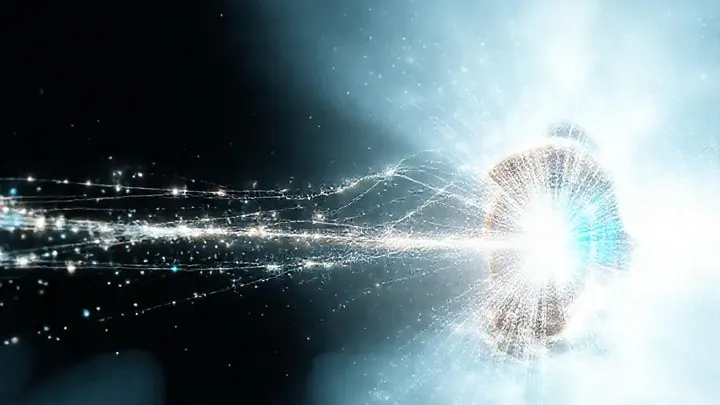
Each positron annihilation is like the birth of a pair of dancers, connected by an invisible thread of polarization. Two gamma quanta fly apart, but their states remain entangled: measuring one instantly determines the other — as if one partner senses every movement of the other, no matter the distance.
Two synchronized swimmers dive into the sea. One hits calm water, the other a whirlpool. Their movements, perfectly coordinated at the start, diverge. Something similar happens to two quantum particles when one moves in flat space and the other in curved space.
The classical Mpemba paradox — hot water freezes faster than cold — has teased scientists for centuries. Only recently has nonequilibrium statistical mechanics explained it: it’s all about boundary conditions; the system seems to seek an excuse to “hit the wall” and speed up cooling.
Building a quantum network node is like teaching a dancer to balance on a carbon thread over an abyss. One leg must spring lightly from the wire, hurling photon-messengers into the external world. The other must grip the rope tightly, guarding precious quantum information.
In quantum mechanics, everything is fuzzy: a particle is not at a single point but smeared across space, and an event does not happen at a single moment. Yet our everyday world is full of definiteness — the coin landed heads, the light bulb turned on, a note appeared in the notebook.
In 1953, mathematician Alexander Grothendieck proved a theorem that became a cornerstone in the theory of tensor products. It states that for ordinary function spaces, two natural norms, the projective and the injective, are equivalent up to a universal constant. In other words, two ways of measuring the 'size' of combinations of vectors give similar results.
Twins enter a room from different doors. Each gets a box with a button, and each time they press it, either a red or a green light flashes. If the twins are perfectly identical, you'd expect their lights to follow the same internal rules. But what if the rules differ even though the twins are exact copies?
That's precisely the scenario the authors explored.
Two particles separated by kilometers change their states in concert, as if there were no distance between them. This is called quantum entanglement, and since its discovery it has baffled physicists: no known carrier can travel faster than light, yet correlations appear instantaneously.
On one side of the scale lies all the matter in the Universe; on the other, all the antimatter. According to the laws of physics, at the moment of the Universe's birth, the pans should have been balanced. But we see one pan tipping: around us are stars, planets, people, and almost no antimatter. This imbalance is one of the greatest mysteries.
In 1867, James Clerk Maxwell proposed an image that still stirs physicists today. Two compartments of gas are separated by a door. Molecules dart about chaotically: fast and slow. A tiny gatekeeper opens the door only for fast ones, letting them through to one side, and slow ones to the other. The hot compartment gets hotter, the cold one colder.
Two particles behave like a pair of unusual dice: thrown at opposite ends of the universe, they always land on the same face. Physicist John Stewart Bell calculated: if the dice had hidden rules, the frequency of matches would have a strict limit.
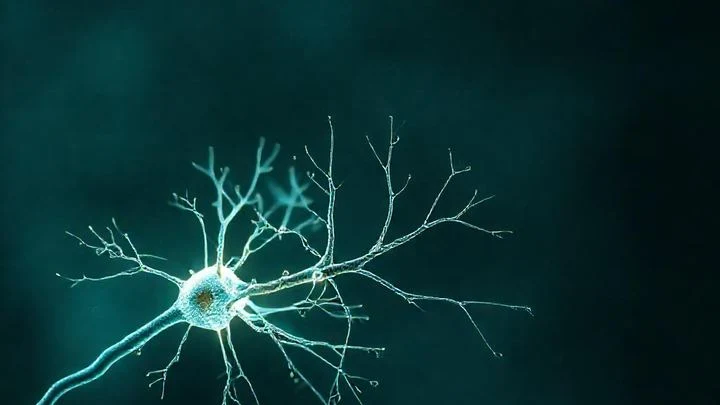
Neurons communicate via electrical impulses. For a long time, their behavior was described by the standard model: after each firing, the cell completely 'forgets' the past, like a car that screeches to a halt the moment you kill the engine. But what if a neuron is more like a car that coasts on its own momentum?
A photographer tries to capture light interference, but has only one lens and the ability to change exposure time. A similar challenge faces cosmologists studying quantum imprints in the cosmic microwave background — the afterglow of the Big Bang.
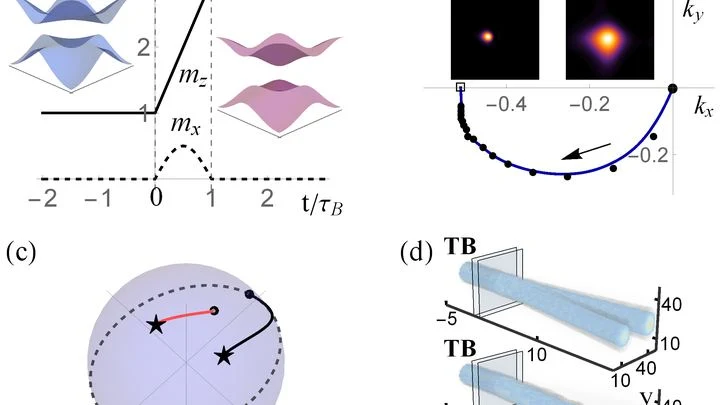
A stone falls into a pond, and ripples spread across the water. They reflect off the shore, overlap, and die out. All this motion unfolds in space. But what if the pond itself changed its depth or density for an instant — not at one point, but everywhere at once? A temporal boundary is exactly such a jump in properties over time, not space.
Two tiny spinning tops fly apart after a collision. Their rotation is not predetermined: it becomes definite only at the moment of measurement. This is quantum entanglement: the state of one top instantly responds to the state of the other, no matter how far apart they are.
Three people sit in three corners of a room. Each receives a sealed envelope from an invisible courier, but the couriers do not coordinate and have never met. The people open the envelopes and see a note with one word: "yes" or "no." They choose nothing themselves: they just read.
A typical recipe explains how to cook a dish: step by step, from the initial ingredients to the finished result. The new approach flips the logic: imagine that the future pie itself dictates how much flour to add now. In the quantum world, researchers suggest, a particle receives signals from the future measurement outcome.
Two coins are flipped in different cities, but they always land the same way. Physicists call this entanglement: particles behave as if an invisible thread connects them. But what if the thread isn't instantaneous, just very fast — still not faster than light? Then some signal could slip between measurements, and the coincidences would be explained without any magic.
A quantum dot is like a tiny lamp that turns on and off at the command of a laser, emitting exactly one photon at a time. But this light has a quirk: the photons don't interact with each other; they fly independently, like random drops from a faucet.
Entangled photons are like two couriers marching in lockstep: their quantum states, particularly polarization, are synchronized so that measuring one instantly determines the state of the other, even at a distance. In a material, this synchronization gets disrupted.
Comparing two scents is easy even without knowing their ingredients, just tell if they're alike. This everyday principle became the foundation for a new class of Bell inequalities, reimagining tests of the spooky connection between particles. Previously, you had to measure precise properties, like spin direction, but the authors showed that simply comparing outcomes is enough.
At the Large Hadron Collider, by accelerating particles to nearly light speeds, top quarks are created — the heaviest building blocks of the Standard Model. They live for vanishingly small fractions of a second but manage to exhibit complex quantum connections.
Two photons, like two halves of the same coin, fly tens of kilometers apart but remain linked: measure one, and you instantly know the state of the other. This property is called entanglement, and it underpins quantum communication.
We are used to thinking that events have causes, objects exist independently, and signals cannot outpace the speed of light. Quantum mechanics, which describes the Standard Model of particles, challenges all these assumptions at once — as if a recipe couldn't use all seven ingredients.
Hot water sometimes freezes faster than cold — that's the classic Mpemba effect. In the quantum world, its counterpart is even more astonishing: tiny particles can reach equilibrium many times faster than expected, and what helps them is not forgetfulness, but memory.
In September 2024, the concert hall in Linz had more than just an orchestra on stage. Next to the musicians, a setup was generating pairs of entangled photons: a laser with a wavelength of 405 nm passed through a nonlinear crystal and split into two photons at 810 nm, which flew off to two measurement stations, Alice and Bob.
In the quantum world, particles do not have precise properties until they are measured. The official model refuses to explain what lies behind this uncertainty. But the idea that invisible 'pilots' control particles has been around since the 1920s.
Two couriers leave the same city in opposite directions. An hour later, each opens an envelope: one contains a slip marked “plus,” the other “minus.” How did they know who would get which?