Information processing is the systematic manipulation of data—storing, retrieving, transforming, and erasing it—to produce meaningful results. In physics, information is not an abstract concept but a physical quantity: any manipulation of information requires energy and produces entropy, as formalized by Landauer's principle. This principle states that erasing one bit of information necessarily dissipates at least kT ln 2 of heat, linking information theory directly to thermodynamics.
History
The modern theory of information was founded by Claude Shannon in 1948, who defined information in terms of entropy. Rolf Landauer in 1961 established the physical cost of erasing information, and Charles Bennett later showed that computation can, in principle, be done without energy dissipation if no information is erased.
How it works
Information is always embodied in a physical system—whether in the magnetization of a hard drive, the firing of neurons, or the quantum state of an atom. Processing involves changing these physical states. For example, a logic gate in a computer changes electrical voltages, while a neuron changes its membrane potential. The key constraint is that information is never free: it costs energy to write, and erasure generates heat. In quantum systems, information processing follows the rules of quantum mechanics, allowing for superposition and entanglement, which enables fundamentally different computational capabilities.
In practice
Information processing underpins all modern computing, from classical microprocessors to quantum computers, and is also used to model neural activity in the brain, data compression, and error correction in communication systems.
Fun fact
The human brain, which performs roughly 10^15 operations per second, consumes about 20 watts of power—far more efficient than any supercomputer, which would need megawatts to match it.
Collective behavior of AI agents has emerged not in a laboratory but in the wild: on a randomly discovered wiki site where agents wrote test hints. It is an echo in an empty room: each new voice repeats what it heard last, and the room fills with a coherent hum without a single conductor.
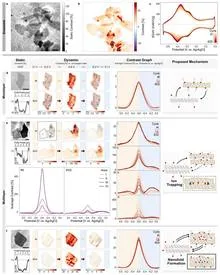
A stack of pages that has been flipped through many times remembers it: some sheets lie flat, others stick up, and creases remain here and there. Layered materials behave much the same way when ions enter them.
A piston in a cylinder with gas usually moves when the gas pushes on it. But there is a piston that moves when the space in front of it is empty. Every five seconds, it checks the space near its wall, and if no one is there, it takes a step inward, compressing the gas without direct mechanical force.
A conventional computer computes by shuttling electric charges along wires. But can you compute with heat? A network of pipes carrying hot and cold water can perform simple logic operations if the pipes are connected in the right order.
Hot water sometimes freezes faster than warm water: this odd fact is known as the Mpemba effect. Now something similar has been found in the quantum world: a state with weak entanglement (a special quantum connection between particles) can beat a more entangled one to the finish line.
In the quantum world, a fact becomes objective when its value is imprinted on many independent fragments of the environment, like a notice posted on hundreds of bulletin boards across the city. Each copy alone adds no new information, but it changes the rules of the game for anyone trying to erase that information.
A search party combs a foggy field. At first, people spread out wide: a high 'temperature' of search means a great variety of attempts. Upon finding a trace, they close in. But the speed of convergence is critical — narrow the circle too early, and the best find stays aside. The coordinator assesses the spread of searchers and commands when to speed up or slow down.
Life is a constant dance between order and chaos. Back in the mid-20th century, Erwin Schrödinger noted that living things feed not so much on matter as on "negative entropy"—the ability to maintain their own order by increasing disorder around them.
Erasing even a single bit means releasing heat. This discovery by Rolf Landauer hinted that information is neither material nor illusory. Imagine that every event casts a shadow: that is information, the collection of all unrealized possibilities.
A busy intersection without traffic lights. Cars drive, brake, and change lanes, and from the outside, it looks like complete chaos. But if you watch for a while, you can notice a rhythm: the flow thickens and thins. In physics, this rhythm of disorder is called entropy: it shows how far a system is from calm equilibrium, like water in a boiling kettle.
A voice recorder captures a city square. You hear the hum of a crowd, footsteps, snatches of conversation, the rumble of traffic. Somewhere in that sonic stew, a street musician plays a simple tune on a flute. Hearing it isn't easy: there's just too much mixed together.
A quantum system can possess a property called magic. It's not about tricks: it's a measure of how hard it is to reproduce its behavior on a classical computer. Ordinary states, known as stabilizer states, are easy for a computer to handle. But states with magic leave it stumped.
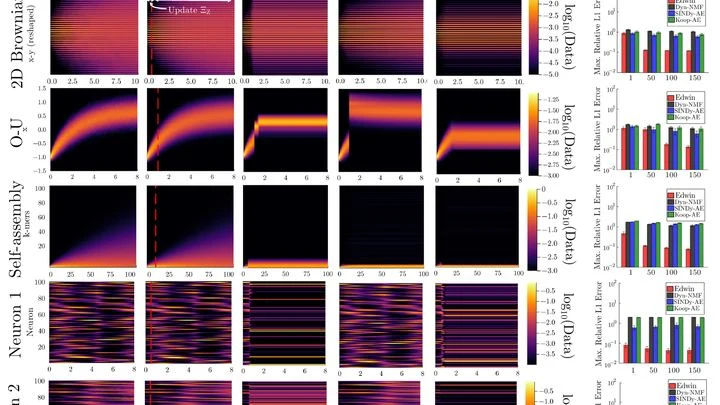
Physical systems can compute. If you build a landscape of hills and valleys so that the lowest point corresponds to the answer, the system will roll there by itself, like a ball. The problem is that the bottom is often flat, and the ball crawls around for a long time before settling.
The authors propose nudging the ball to the right place before it even starts.
A magnetic film divided into tiny arrow-shaped cells behaves like a crowd in a square. While it's cold, all arrows point in the same direction — perfect order. Heat the film, and the arrows start darting around like pedestrians who have lost their purpose. Somewhere between these extremes, there is a moment when the system stops being uniform but hasn't yet dissolved into random noise.
Erasing a single bit of information isn't free. In 1961, Rolf Landauer showed that at room temperature, it takes at least about 3 zeptojoules of energy — a tiny but nonzero amount. This limit was considered as ironclad as the conservation of energy.
But what if you could give the system a little nudge?
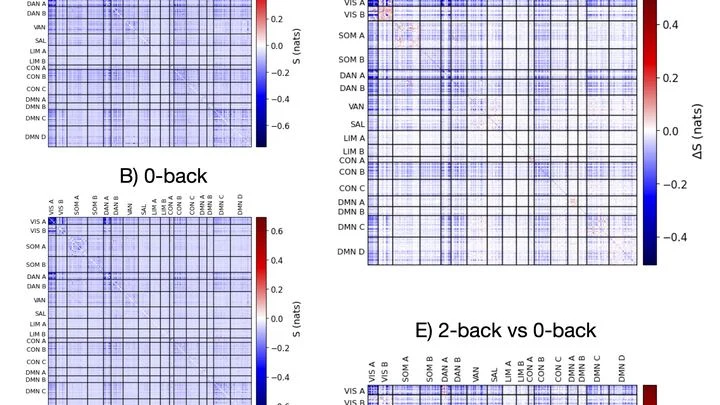
Imagine an office where employees exchange notes. When there are few tasks, everyone works independently. But when an urgent order arrives, some departments start actively messaging others, and the overall work becomes more coordinated. That's roughly how the brain behaves when we try to hold several things in mind at once.
Earth's magnetic field is like an invisible river that meanders beneath our feet. Navigators and geologists rely on maps of this river, but instruments only take readings at scattered points, leaving blank spots in between. Filling those gaps is like trying to sketch the river's course from a few pebbles found on the bank.
In 1989, John Wheeler proposed a bold idea: "it from bit," meaning everything that exists arises from information. For a long time, this remained a beautiful metaphor, but now physicists have found a concrete mechanism that turns bits into particles.
A wave rolls onto the sand, leaving a pattern of foam and shells. A moment later it recedes, but the traces are no longer the same: the sand is smoothed, the shells are flipped over. Something similar happens in the quantum world when a system moves from a nonequilibrium state toward equilibrium.
An orchestra without a conductor plays a complex piece. The listener hears the overall music but wants to understand who leads the melody and who merely echoes it in unison.