Uncertainty estimation is the process of quantifying how confident we are in a measurement or a model's prediction. In physics, every measurement has some degree of error—whether from instrument limitations, environmental noise, or fundamental quantum limits—and uncertainty estimation provides a formal way to express that error. For models, it answers the question: 'How much can I trust this prediction?' This is essential in fields ranging from climate science to particle physics, where decisions are made based on predictions with inherent uncertainty.
History
The formal treatment of measurement uncertainty began in the 18th century with the work of Carl Friedrich Gauss on the method of least squares. In the 20th century, the development of Bayesian statistics by Thomas Bayes (published posthumously in 1763) and later by Pierre-Simon Laplace provided a rigorous framework for combining prior knowledge with data. The modern standard for expressing measurement uncertainty was established in 1993 with the ISO Guide to the Expression of Uncertainty in Measurement.
Used in medical imaging (e.g., diagnosing breast cancer from X-ray shadows), in climate modeling to predict solar flares with confidence intervals, and in particle physics to report the significance of new discoveries.
Fun fact
The 2012 discovery of the Higgs boson was only announced after the uncertainty in the measurement was reduced to a 5-sigma level, meaning there was less than a 1-in-3.5-million chance the signal was a statistical fluke.
The orchestra plays without a conductor. Each instrument follows its own schedule: the violin on Monday, the flute on Wednesday, the timpani on Saturday. Astronomers hear not music but isolated notes scattered across the calendar. A telescope sees a star only when it is above the horizon and when the schedule has allotted time for it.
Every printed part is a lottery ticket. The prize in this lottery is not money but fatigue life: how many load cycles the metal can withstand before a crack initiates. The ticket number is set by the random arrangement of grains and pores that arise during laser powder bed fusion.
A chef tastes tiny morsels from different edges of the plate and tries to reconstruct the recipe of a complex dish. Each morsel offers only a hint of flavor, and the samples are a bit blurred — too much salt here, not enough sugar there. That's roughly how nuclear physicists study the matter inside neutron stars — the densest objects in the universe after black holes.
If a smell seeps into a room through a slightly open door, you could stand in the middle and sniff. But the most accurate way to catch the moment the smell arrives is to stand right at the threshold. A cell behaves much the same way when it needs to measure the concentration of a substance around it.
If you accelerate an observer to near-light speed, the emptiness around them stops being cold. A thermal glow emerges — an effect predicted in 1976 and named after William Unruh. For earthly accelerations, this glow is vanishingly faint, like a whisper at a rock concert.
The optical sky background is a cosmic palimpsest, where light from billions of unresolved galaxies is layered, each layer corresponding to a different epoch. Until now we could only distinguish the brightest "letters"—individual stars and nearby galaxies.
Technological disasters like Chernobyl rarely strike without warning. They gestate for years: organizations ignore warnings, their complexity mirroring the rise of entropy — a measure of relentless chaos that builds up unnoticed until it avalanches.
A false vacuum is not just a supercooled liquid, but a quantum hologram, ready to spring to life under the right projection. Its decay is described by the tunneling of a quantum field from a metastable minimum, and the classic calculation via Euclidean instantons is as elegant as a still life under spotlights.
The vacuum is not as empty as it seems. If an observer moves with acceleration, the vacuum around them heats up: this was predicted by William Unruh back in the 1970s. The effect is akin to black hole radiation, but in flat space.
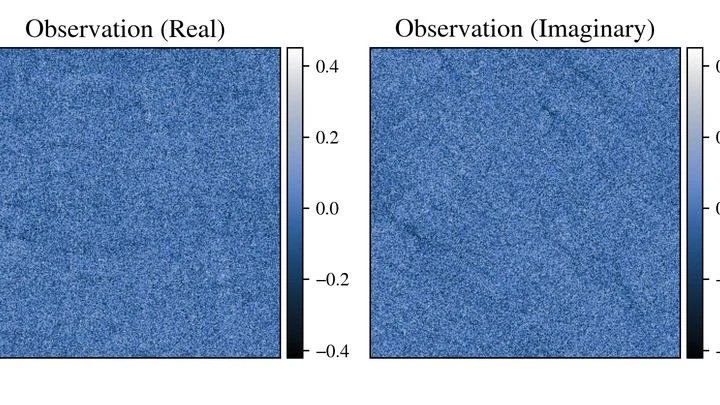
A camera takes a snapshot, but the sensor is noisy, the optics blur, and some pixels are overexposed. Reconstructing the original picture is like guessing a melody from a scratched record: there are many possibilities, and which one is true is unclear.
Quantum calculations are a recipe with perfect ingredients, but nature-the-chef cooks in her own way. Machine-learned models of atoms memorize the recipe and predict material properties in seconds instead of weeks.
A uranium nucleus is like a tight wallet snapped shut on two halves. To make it burst and release energy (that is, to make the nucleus split) you have to climb over an energy barrier. The height of this threshold determines whether a substance is stable or ready to fall apart at any moment.
A typical medical neural network sees a patient as a point on a map: there's height, blood pressure, a blood test, and the model places a single label: "healthy" or "sick." But in a real hospital, the map is always torn. One test is done on Monday, another a month later, and the CT scanner is a different brand altogether. A point on such a map is self-deception.
When a neutron or proton enters an atomic nucleus, it behaves like a ball hitting a rough wall: it can bounce off in different ways, depending on where it hits.
Solar flares — sudden energy releases on the Sun — can knock out satellites and power grids. Previous models often either cried wolf or missed a real blow. The fix: attach a reliability estimate to every prediction.
A neutron star is a sphere the size of a city, but it weighs as much as one and a half Suns. Inside such a sphere, matter is so compressed that a teaspoon of it would weigh billions of tons. But physicists don't fully know what this matter is made of.
An orchestra of a hundred musicians plays without a conductor. As long as the score is familiar, each player confidently follows their part, and together they sound harmonious. But when the composer changes the rhythm, discord creeps in: some instruments keep playing the old tune, others try to adapt, and a few fall silent.
A flashlight beam in fog reaches some objects and fades before touching others. So it is with El Niño forecasts: for events in the central Pacific, the light reaches almost two years ahead, but for eastern events it gets lost in random wind gusts within six months.