Spontaneous emission is the fundamental quantum process by which an excited atom, molecule, or other quantum system drops to a lower energy state and emits a photon — a particle of light — without any external trigger. Unlike stimulated emission, which requires an incoming photon to provoke the transition, spontaneous emission happens randomly, governed only by the intrinsic properties of the system and the vacuumfluctuations of the electromagnetic field. This randomness is not a flaw but a feature: it underlies the natural glow of hot objects, the operation of lasers (in their initial phase), and the quantum noise that limits many precision measurements.
History
Albert Einstein introduced the concept in 1917 to explain the observed spectrum of blackbody radiation, postulating the A coefficient for spontaneous emission alongside the B coefficients for absorption and stimulated emission.
How it works
The mechanism is rooted in quantum electrodynamics. An excited state has a certain lifetime, after which it decays with a probability per unit time given by the Einstein A coefficient. The emitted photon's direction, polarization, and phase are entirely random. The process is intimately connected to the quantum vacuum: the excited system interacts with the zero-point fluctuations of the electromagnetic field, which 'stimulate' the emission even in the absence of real photons. This is why spontaneous emission can be modified by placing the atom in a cavity that alters the vacuum field structure.
In practice
Spontaneous emission is the basis for light-emitting diodes (LEDs), fluorescent lamps, and the initial light generation in lasers; it also sets the fundamental linewidth of laser light and is a key noise source in quantum optics experiments.
Fun fact
Spontaneous emission is not truly spontaneous in the sense of being uncaused — it is driven by the vacuumfluctuations of the electromagnetic field, which exist even at absolute zero temperature.
An avalanche in a sandpile starts with a single grain. No one knows exactly where it will slip or how big the slide will be. But if you keep pouring sand, the pile itself reaches a state where avalanches of all sizes, from tiny trickles to massive collapses, follow the same law.
A laser hits an atom, and tears out an electron. The brighter the light, the stronger the kick, and the faster the electron flies away. That's how the familiar picture works, where light is a smooth wave. But what if the light isn't smooth but 'squeezed,' with quantum fluctuations, like the trembling of a string?
An empty resonator isn't truly empty. Even in an absolute vacuum, where not a single photon exists, quantum fluctuations persist. They resemble ripples on water in a dead calm: the surface appears smooth, but molecules keep jittering. Physicists have learned to turn this jitter into real waves.
For almost a century, cosmologists have been grappling with the mystery: what makes the Universe expand ever faster? The standard answer — dark energy — creates a monstrous discrepancy between the theoretical vacuum density and observations. But there's another path, one that turns causality on its head.
Quantum bits (qubits) are like delicate music in a noisy factory. Ambient magnetic fields constantly 'drown out' their quantum state, turning a coherent signal into cacophony. Usually, this destructive process is slowed by retuning the qubits themselves to different frequencies, but that doesn't always work.
A driver turns the steering wheel to make the car turn. The quantum world also has its own "steering wheels"—external parameters that are slowly varied to shuttle particles from one place to another.
A stone falls into a pond, and ripples spread across the water. But if the stone is very small and the water is not quite ordinary, the ripples pass right through it, as if it weren't there.
Two musicians in separate rooms play the same note. The sound must be so identical that a listener can't tell who is playing. In the quantum world, these musicians are single-photon sources — particles of light that must be indistinguishable from one another.
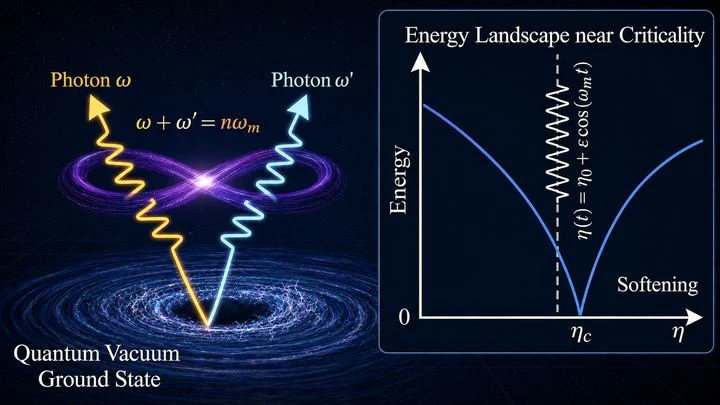
The quantum vacuum is not emptiness, but a tautly stretched string, where particles constantly appear and vanish. Abruptly changing conditions, like shifting the mirrors of a microcavity, causes the 'string' to emit real photons.
In superfluid helium, a vortex is like a tornado in a bottle, but instead of water, it's a quantum liquid that flows without friction. Such a vortex doesn't dissipate on its own, so the question of where its energy goes has long remained open.
At night in a dark room, the human body emits a barely perceptible glow. This light is so faint that only highly sensitive detectors can catch it. Some researchers thought this glow from the head could tell us about brain activity — no scanners or wires needed.
But when put to the test, the story changed.
The tip of a scanning tunneling microscope approaches a crystal surface so closely that an electric current jumps between them. Electrons from the needle are injected into a layered semiconductor and land in an atomic vacancy — a spot where one atom is missing from the lattice. This void acts as a tiny trap for charge.
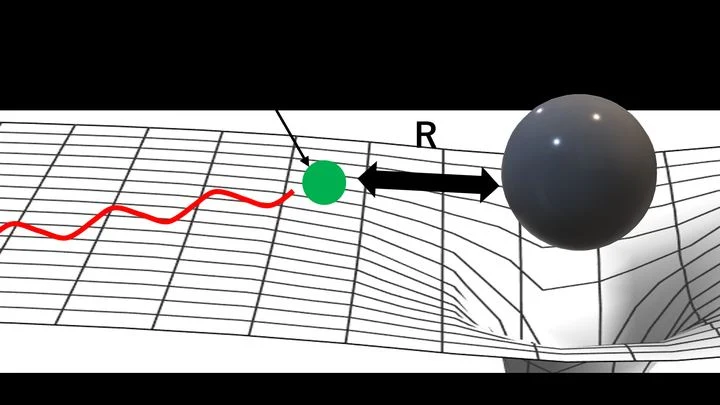
An atom excited by light gives its energy back in an instant — it emits a photon. This process is like a tired runner dropping a heavy load. But if the runner is on a mountain slope, it's harder to pick up speed. Gravity acts on the atom similarly: near a massive body, time flows slower, and the atom emits differently.
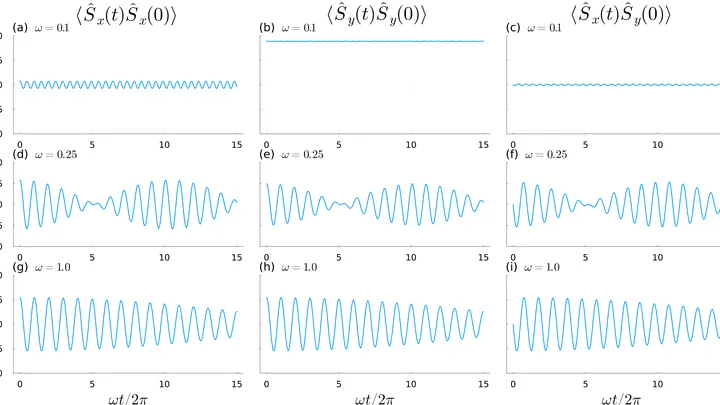
Hot water sometimes freezes faster than cold — that's the classic Mpemba effect. In the quantum world, its counterpart is even more astonishing: tiny particles can reach equilibrium many times faster than expected, and what helps them is not forgetfulness, but memory.
Two travelers head for the same destination. One starts closer but takes a winding country road. The other starts farther away but immediately hits the highway. The second arrives first. In quantum physics, this paradox is known as the quantum Mpemba effect: a state initially farther from equilibrium reaches it faster than one that starts closer.