Optics That Fix Themselves
An orchestra of a hundred musicians plays without a conductor. Every instrument is tuned perfectly, but one violin goes slightly off, and the harmony falls apart.
Spontaneous coordination in systems where individual components begin to act in unison without external control.Emergent synchronization is the phenomenon where a collection of individual oscillators — be they fireflies, neurons, or quantum spins — spontaneously lock into a common rhythm without any central controller. In physics, this concept explains how large-scale coherent behavior arises from local interactions, from the synchronized flashing of fireflies to the phase-locking of lasers. It is a prime example of emergence, where the collective behavior is qualitatively different from that of the individual parts.
The modern mathematical framework was introduced by Yoshiki Kuramoto in 1975, building on earlier work on coupled oscillators by Edward Appleton and Balthasar van der Pol in the 1920s. The concept was popularized in physics by Steven Strogatz in the 1990s.
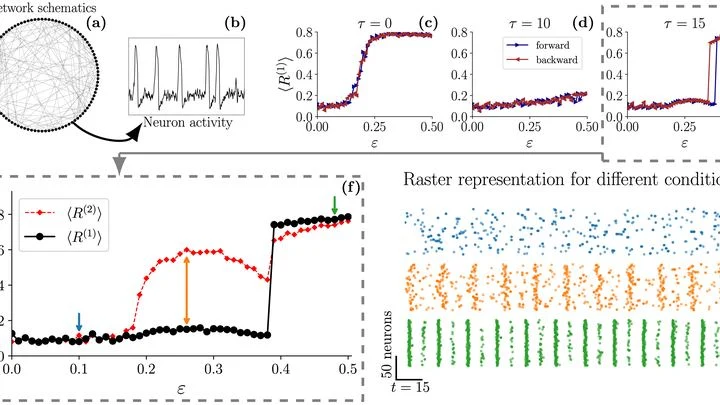
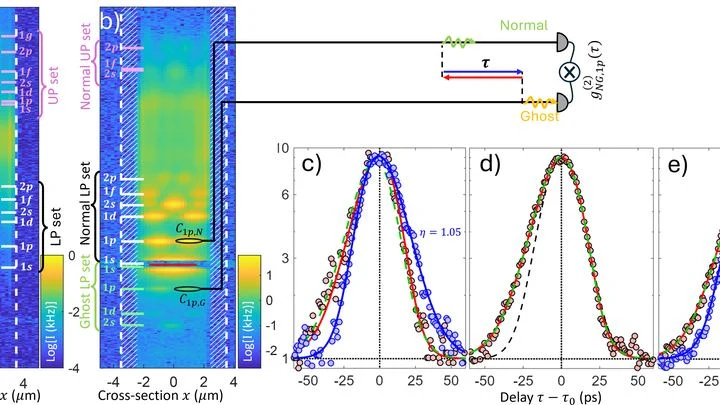
The mechanism was formalized by Yoshiki Kuramoto in 1975: each oscillator has a natural frequency, but when coupled to others, it adjusts its phase toward a common value. If the coupling is strong enough relative to the spread of natural frequencies, a fraction of the oscillators locks into synchrony, while others remain drifting. In quantum systems, synchronization can emerge from the exchange of virtual photons or phonons, and even from noise — as in the case of two quantum pendulums that synchronize through a shared environment. The key is that the interaction creates a feedback loop that suppresses differences in phase.
Synchronization principles are used to design stable laser arrays, to coordinate power grids, and to understand neural oscillations in the brain, which are linked to memory and attention.
In 2002, a team placed 53 metronomes on a swaying platform, and within minutes they all ticked in perfect unison — a classic demonstration of emergent synchronization through a shared support.