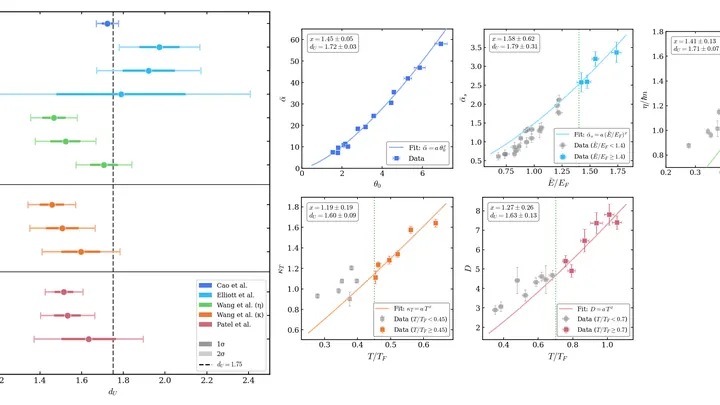
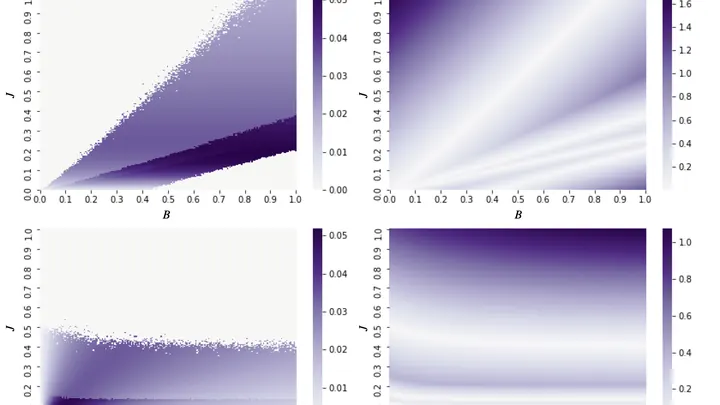
In quantum field theory, a central charge is a special operator that commutes with every other operator in the theory's algebra. This means it is a 'global' quantity that remains unchanged under all symmetry transformations and interactions, acting as a kind of immutable label or conserved quantum number. Central charges often appear in the algebra of symmetry generators, where they encode deep structural features of the theory, such as the presence of extra dimensions or the number of supersymmetries.
History
The concept of central charges emerged in the mid-20th century within the study of Lie algebras and their representations, particularly in the context of quantum mechanics and quantum field theory. The term 'central charge' was popularized in the 1960s and 1970s through the development of current algebras and later in supersymmetry, where central charges play a crucial role.
How it works
Think of the operators in a quantum field theory as the possible measurements or transformations you can perform. A central charge is an operator that, when you apply it before or after any other operation, the order doesn't matter—it commutes. This property makes it a 'center' of the algebra, like the hub of a wheel. In practice, central charges often arise from the commutators of symmetry generators, and their values can be fixed numbers (like the electric charge) or more abstract parameters that characterize the theory.
In practice
Central charges are used in theoretical physics to classify and distinguish different quantum field theories, especially in supersymmetric theories and in the study of conformal field theories, where they determine the theory's behavior under scaling.
Fun fact
In supersymmetric theories, the central charge is often proportional to the mass of certain particles, so measuring the mass can directly reveal the value of the central charge.
In a quiet room with no magnets anywhere, two electrons in a silicon trap still feel a faint trembling. It comes from the nuclei of silicon and germanium atoms, which spin randomly like the needles of broken compasses. This trembling was once considered noise, but now it has become a measuring instrument itself.
In a mountain range, there are trails that can be contracted to a point if you walk through a flat valley. But there are also loop routes that cannot be shrunk without crossing a ridge.
Electric charge is a slippery thing. You can measure how much there is in the entire universe or in a single particle, but try to point your finger and say, 'Right here, in this cubic centimeter, there is exactly this much charge right now,' and you hit a fundamental wall.
The issue is that total charge, which physicists denote by the letter Q, is nonlocal.
$$10^{-35}$$ seconds. A tiny instant during which the Universe manages to expand by a factor of $$10^{26}$$. Immediately after, it goes through thousands of rapid transformations — like a ball bouncing along a chain of tunnels. This cascade is the essence of chain inflation, first proposed by Alan Guth.
A pale green crystal was placed in a magnetic field and cooled below one kelvin — almost to absolute zero. Inside it hide chains of copper atoms that behave like tiny magnetic needles. Usually their orientation is chaotic, but the strong field and cold make the needles align in a unified impulse, like soldiers on a parade ground.
Two light rays meet at a point and then diverge. Their paths form two intersecting surfaces in spacetime — null hypersurfaces (boundaries along which light propagates). It is on such a pair of surfaces that physicists can set initial data for Einstein's equations. This is called the characteristic Cauchy problem.
A quantum spin chain is like a string of beads, where each bead is a microscopic magnet pointing up or down. In the XXZ model, these little magnets interact differently along the three axes, and at special parameter values, roots of unity, the system awakens with a hidden memory.
A black hole is like a spinning top: the faster it spins, the more noticeable its behavior. It has two boundaries — the outer and inner horizons, the edges beyond which even light cannot return. In the new work, physicists looked inside a rotating charged black hole and multiplied the areas of these two surfaces.
Hot water sometimes freezes before cold: this is the Mpemba effect. In the quantum realm, a similar paradox appears: the more the equilibrium is disrupted, the faster it recovers. It's like fleeing from disorder (entropy) in reverse: the system rushes toward order, and a large initial imbalance only helps.
A translator gets distracted by every rustle in the hall, and a one-hour meeting stretches into two. That's roughly how ordinary quantum mechanics works: a particle evolves in time, while space serves as the stage. But what if we swapped their roles? Then the particle 'moves' through space, and time becomes a static backdrop.
An ordinary battery in a phone stores energy in chemical bonds — slowly, with heat and wear. A quantum capacitor works differently: it charges not with matter but with rhythm. A swing that is pushed in time with its motion accumulates energy in the motion itself, without friction.
Throw a stone into a pond, and ripples spread across the water. Throw two stones nearby, and the ripples intersect, creating a pattern of reinforced and canceled waves. That's interference.
On the table sits a glass of water. For each molecule, all directions are equivalent: it doesn't distinguish north from south. That's symmetry. But if you freeze the water, the molecules align into an ice lattice, and symmetry breaks: a preferred direction emerges.
The quantum world breaks symmetry more cunningly. The glass freezes, yet each molecule still tumbles randomly.
A quantum battery is not a box of chemicals but a chain of tiny magnets (spins) capable of storing energy. Its main trick: charge many particles at once, using their quantum entanglement. But there's a catch — not all entanglement works.
In particle physics, it has long been taken for granted that the forces of nature (electromagnetism, the weak and strong interactions) obey a strict symmetry called gauge symmetry. It's like a set of rules by which particles exchange force carriers. But where do the rules themselves come from?
A stone drops into a pond. Ripples spread, fade, and soon the surface is smooth again. But what if the pond has no shores, no bottom, and no characteristic ripple size? That is the world, a scale-free world, where quantum systems live when surrounded by an environment that picks out no particular length or energy.
Normally, current flows equally well in both directions if there's no magnet. A magnetic field or magnetic material breaks that symmetry: electrons start to prefer one direction. But in a new study, physicists found a way to do without magnets.
In a crystal, atoms may not sit perfectly ordered but with some disorder.
The quantum Hall effect has long been suspected of superfluidity — the ability to flow without friction. Imagine a cook following a recipe: for each unit of magnetic flux, he must add exactly a certain number of electrons.
In a chain of eight spins, a defect lurks — a tiny magnetic moment. The Kondo effect, known since the 1930s, makes electrons around it align into a collective screen. The material's resistance abnormally increases. But detecting such an impurity hidden deep in the structure is like finding a stone at the bottom of a dark pond.