Image Processing eess.IV

42 articles

Theory, algorithms, and architectures for formation, capture, processing, communication, analysis and display of images, video, and multidimensional signals.

articles

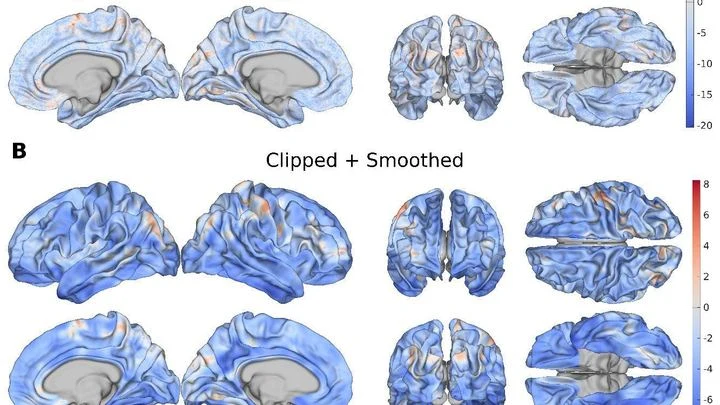
A Map of Brain Aging
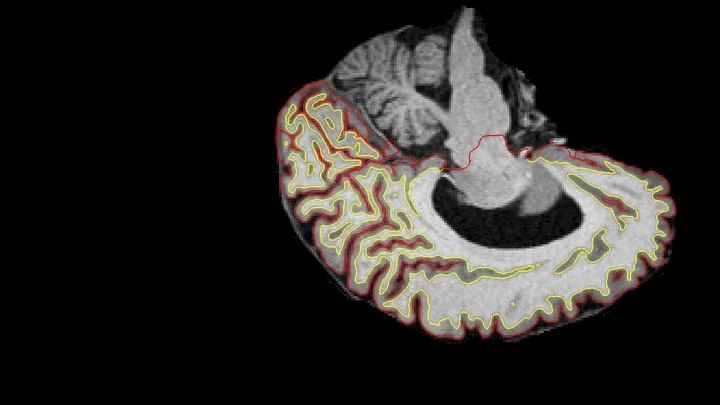
The cerebral cortex is like a crumpled sheet of paper: it has thickness, curves, and folds of varying depth. With age, this sheet changes unevenly — thinning in some places, losing the sharpness of its folds in others. Previously, doctors assessed brain age as a whole, as if looking at the sheet from a distance.
Optics2026-01-231 minarXiv:2601.16904express
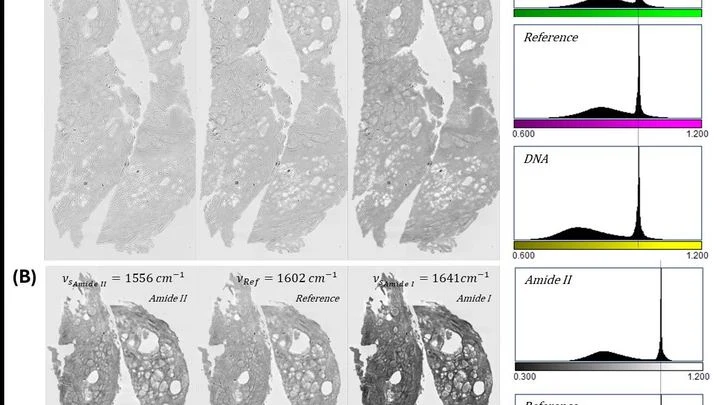
Microscope Sees Cells Like an Artist
A pathologist looks through the eyepiece and sees a pink-purple tissue section — the classic hematoxylin and eosin stain. The dyes bind to nuclei and cytoplasm, and the color tells the doctor about the disease. But preparing the slide itself takes hours: fixation, paraffin embedding, sectioning, staining. This new device skips the dye.
Materials2026-01-242 minarXiv:2601.17262express
Crystal Map: How to Sort Through Millions of Images
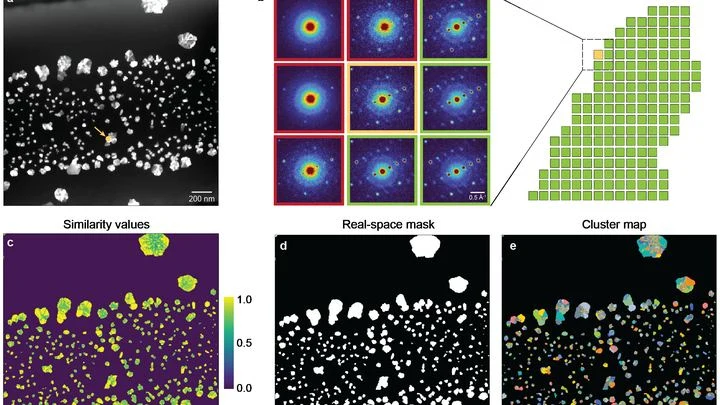
An electron microscope scans a sample and records how electrons scatter off atoms at each point. The result is a giant stack of images — one for every point. These images encode information about how atoms are arranged: in neat rows or with a tilt, the orientation of the crystal lattice, and whether there are internal strains.
Optics2026-01-261 minarXiv:2601.18583express
Infrared Vision Without Cooling
A conventional thermal camera is like a thermometer that slowly heats up and cools down. It shows where heat is well, but it can't keep up with fast motion. The new sensor works differently: it counts individual quanta of heat, like a droplet counter during rain.
Image Processing2026-01-271 minarXiv:2601.19743express
A Heart Under a Clear Dome
An echocardiogram is like a window into the engine room: you can see the chambers contracting and relaxing. The key question is how much blood the heart pumps out with each beat. Doctors calculate this by hand, and two specialists can differ by 10–15%. A computer could be more precise, but typical neural networks are like black boxes: they give an answer but don't say how.
Image Processing2026-02-121 minarXiv:2602.11873express
How to Assemble an Aorta from Six Scans
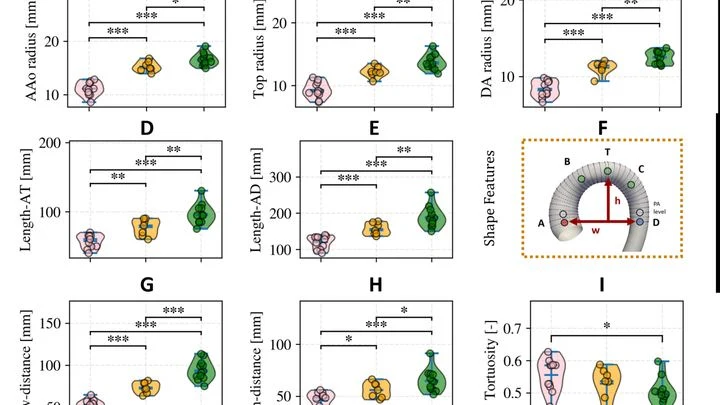
The body's main artery, the aorta, is not just a tube. With each heartbeat, it stretches and contracts like a rubber hose under water pressure. Seeing this motion in volume is hard: standard MRI gives only flat slices, and full 3D imaging over time requires expensive equipment and long periods lying in the scanner. A group of researchers found a way out.
Optics2026-03-151 minarXiv:2603.14391express
X-ray captures metal melting at 25,000 frames per second
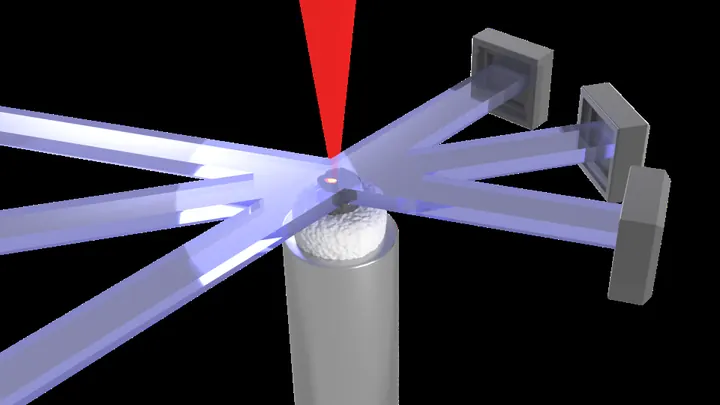
A laser melts metal powder layer by layer, and inside the boiling pool, vapor bubbles appear and collapse within milliseconds. Seeing this kitchen in action was previously impossible: the X-ray tomograph that takes 3D images is too slow. The sample has to rotate, and by the time it does, the melt has already changed a hundred times.
Geophysics2026-04-111 minarXiv:2604.10331express
How to Find an Underground Cable by the Noise of Traffic
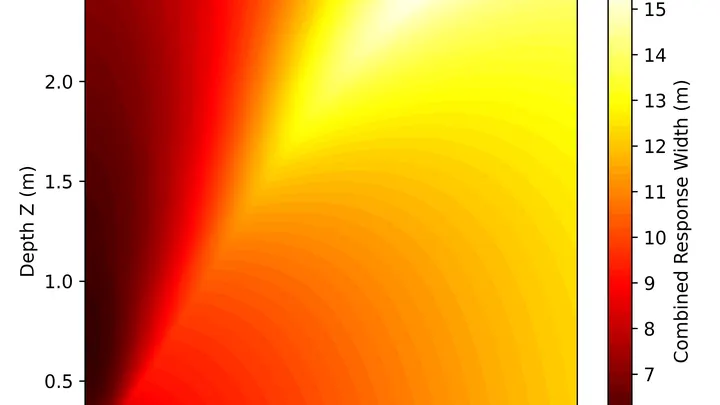
Beneath city streets lies a web of fiber optics — hundreds of kilometers of glass threads carrying the internet. But accurate maps of this web are often lost or outdated. Finding a cable underground is like feeling for a wire inside a wall without knowing where it runs. This new method turns the cable itself into an ear.
Optics2026-04-231 minarXiv:2604.21636express
Microwaves Feel for the Edge of a Tumor
A surgeon removes a breast tumor, but how do you know no cancer cells are left at the edge? Right now, the tissue goes to a lab, and the answer comes back days later. If the margin is not clean, a second surgery is needed. The new method promises to give the answer right in the operating room, while the patient is still on the table.
Image Processing2026-04-261 minarXiv:2604.23675express
Optical Tomography Gets Simpler and More Accurate
Light passing through a turbid medium like milk or living tissue scatters in all directions. Reconstructing where light was absorbed more strongly is like guessing the shape of a fallen object from a puddle on the asphalt. Optical tomography solves this problem, but usually requires large computational resources.
Medical Physics2026-05-042 minarXiv:2605.02615express
Tumor Cells Reveal Their Maps
A drop of ink in a glass of water spreads quickly and evenly. But if the water is squeezed between tightly packed spheres, the ink cloud crawls slowly and erratically: it dodges obstacles and gets stuck in narrow necks. Water molecules in living tissue move in much the same way.
Medical Physics2026-05-091 minarXiv:2605.09091express
How MRI is learning to tell water in muscles from water in blood vessels
To peek inside a muscle, it is illuminated with radio waves in a strong magnetic field: that's how MRI works. Water in cells and water in blood respond differently, but a standard scanner doesn't tell them apart: it produces an averaged image where the signal from capillaries is superimposed on the signal from muscle fibers.
Image Processing2026-05-223 minarXiv:2605.24179express
Why Your Hand Trembles but Your Legs Won't Move
For one person, the disease begins with a tremor in the hand — the cup dances on its saucer as they carry it to the table. For another, the legs suddenly refuse to move smoothly: the step becomes short and shuffling, as if the floor were suddenly covered in a sticky layer. These are not two different diseases but two faces of the same one — Parkinson's disease.
Medical Physics2026-05-241 minarXiv:2605.25139express
Seeing Through Bone Without X-Rays
Ultrasound isn't just for baby pictures on a screen. It can scan muscles and tendons, but there's a catch: bones. To sound waves, they act like mirrors to light. The reflection is so strong that nothing behind them is visible.
Quantum Physics2026-06-251 minarXiv:2606.27411express
The Quantum Compressor: A New Way to Find Brain Tumors
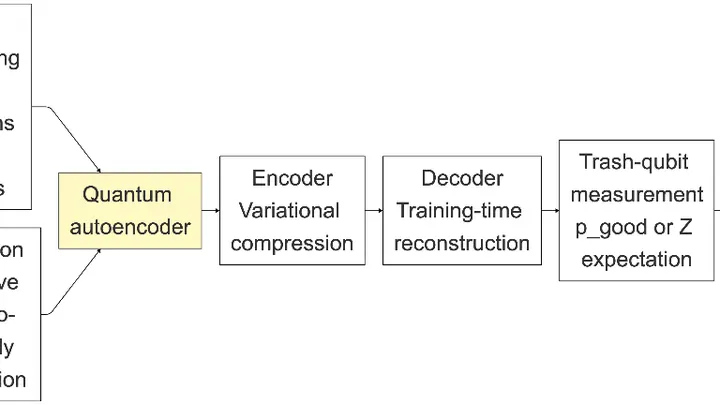
A cook spends years honing the skill of reducing a recipe to three or four essentials and recreating the dish from them. If the ingredients are familiar, the expected meal lands on the plate. A foreign ingredient disrupts compression, and you get something unrecognizable. The Quantum Compressor does the same with medical scans.
Image Processing2026-06-272 minarXiv:2606.29085express
Herculaneum Scrolls Speak After Two Thousand Years
A charred lump the size of a fist is all that remains of a scroll from the library of the Roman city of Herculaneum. Buried by the eruption of Mount Vesuvius two thousand years ago, the text hidden inside has gone unread ever since. Physically unrolling such a scroll would turn it to ash. But now archaeologists no longer have to take that risk.
q-bio.QM2026-07-042 minarXiv:2607.03740express
Lamp Light Against Blindness: How Three Images Reveal Fungus or Bacteria
The eye is inflamed, the cornea clouding. The doctor needs to quickly determine the culprit — bacteria or fungus. The treatment depends on it. A mistake can cost sight. But the classic lab answer takes days, and in remote areas it may never arrive. Researchers from the US and India propose a different approach: three images from a slit lamp — a device found in nearly every eye clinic.
Image Processing2026-07-041 minarXiv:2607.03931express
AI Outlines Cancer in Whole-Body Scans
A radiologist stares at gray-white smudges on the screen — dozens of body slices where every suspicious spot must be found. Manual segmentation of one patient takes half an hour, and a large clinic sees hundreds of such patients. Fatigue and varying experience inevitably introduce variability: two specialists will outline the same lesion slightly differently.
Networking2026-07-131 minarXiv:2607.11231express
Cloud Gaming: Stop Pouring Water into a Full Glass
When a glass of water is full, pouring more is pointless waste. Cloud gaming often does the same with video data: encoders push the stream to maximum, even though the eye stops noticing improvements long before the limit. This overconsumption means extra traffic and entropy in the network — useless noise clogging the channel.
Image Processing2026-07-131 minarXiv:2607.11385express
How Cleaning MRI Scans Helps Find Prostate Cancer
Prostate MRI scans often look like photos taken through a dirty window: noise, blurred edges, curvature from field imperfections. Scientists checked what happens if you 'wash' that window: remove the excess, correct the distortions, and accurately align different types of scans.
Computer Vision2026-07-141 minarXiv:2607.12375express
AI with a magnifying glass and a spectrometer: image quality assessment
Assessing image quality is a job for a meticulous inspector with a toolbox. The IQA-T1 neural network acts exactly like that: it doesn't just stare at the picture, but applies either a spectroscope or a light meter.
Image Processing2026-07-141 minarXiv:2607.12586express
Water's Geometry Improves Medical Scans
Medical scans are maps of tissue density. The brightness of each pixel reveals what’s there, much like photometry measures light intensity. But conventional algorithms analyze pixels in isolation, producing jagged organ boundaries. A new approach compels the program to prioritize smoothness.
Image Processing2026-07-141 minarXiv:2607.12593express
Tiny Probe: The Drone That Flies Like a Spacecraft
A bee-sized quadcopter autonomously charts its route indoors, like a space probe through an asteroid field. Its camera works as a photometry instrument, capturing reflected light, while the processor decides where to turn at the speed of light.
Image Processing2026-07-141 minarXiv:2607.12636express
Photo Compression: How Brightness Helps Predict Color
A raw digital photo resembles a mosaic: each pixel holds only one base color — red, green, or blue. To compress such a file, it's split into brightness (a detailed black-and-white image) and color components.
cs.AR2026-07-141 minarXiv:2607.13106express
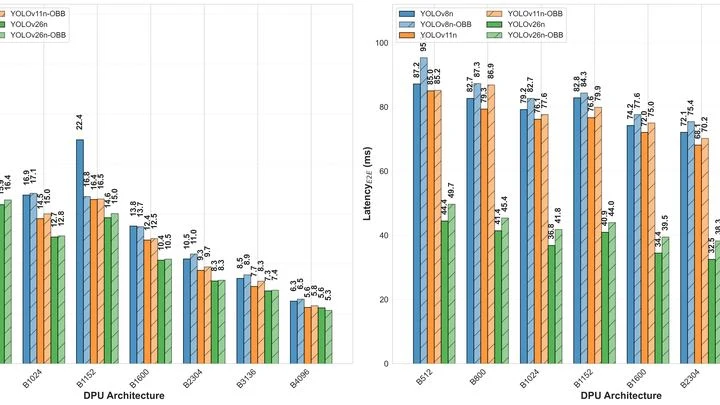
Teaching Cameras to See Faster and Cheaper: On-Chip Neuromorphic Video Processing
Modern machine vision systems are gaining autonomy: engineers have managed to implement an image recognition algorithm directly on a miniature chip, freeing the camera from having to send data to a bulky computer.
Image Processing2026-07-141 minarXiv:2607.13204express
How a Tomograph Gathers Shadows to See the Invisible
Tomographs don't produce ready-made pictures. They collect numerous 'shadows' — projections of innards from different angles or using various signals — and mathematically reconstruct a 3D picture from them.
Computer Vision2026-07-151 minarXiv:2607.13471express
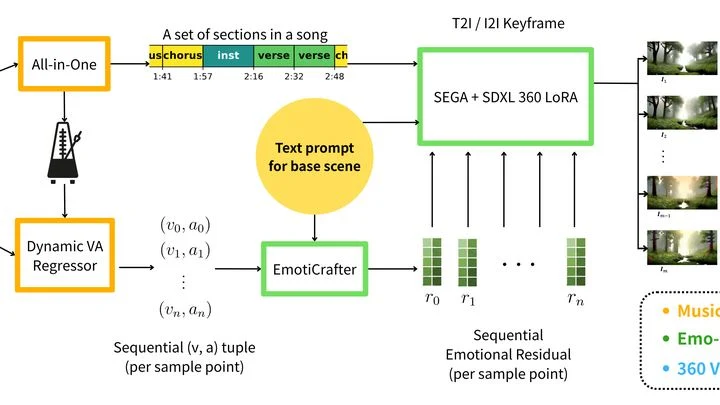
The Musical Horizon: How a Song Gains Dimension
A conductor holds not a baton but a brush, and each stroke gives birth to color and form. New technology works the same way: it transforms a song's mood into a panoramic video that surrounds the listener. First, the algorithm decomposes the track into emotions, similar to how light is analyzed by spectrum.
Image Processing2026-07-151 minarXiv:2607.13601express
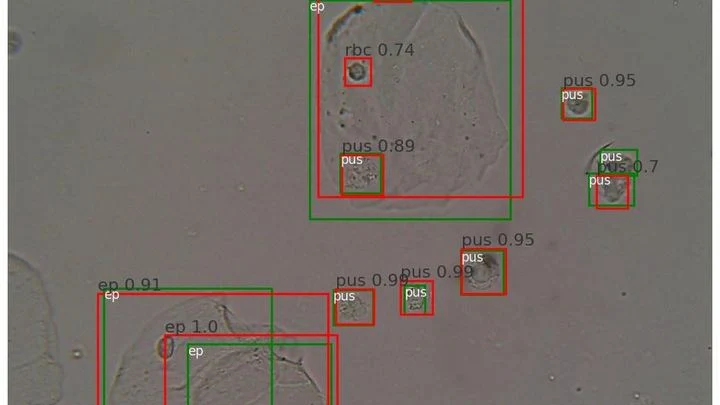
Video Instead of Dozens of Shots: Urine Analysis Made Easier
A drop of urine under a microscope isn't a flat puddle but a multi-layered volume. Like a stack of transparent pages: if you focus on one, the neighboring ones blur. The microscope's light only shows one depth layer sharply. To see all the cells, a lab technician had to take a series of snapshots, manually adjusting focus — tedious and slow.
Image Processing2026-07-151 minarXiv:2607.13800express
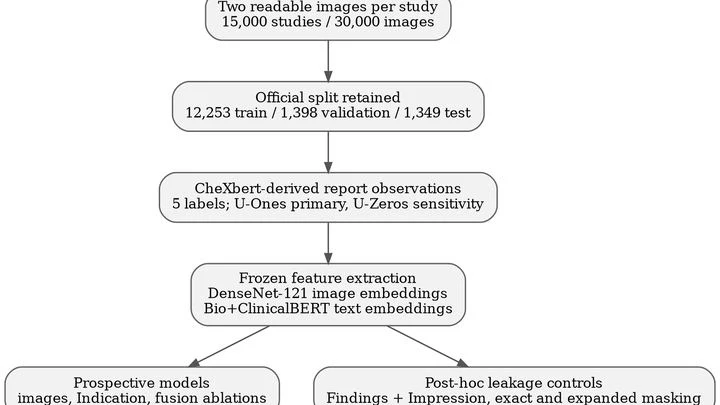
How AI Learns Not to Peek at the Cheat Sheet
The AI diagnostician learns like a med student before an exam. You have an X-ray and patient complaints. But sometimes, a ready-made doctor's report pops up in the training materials — the full answer. Then the neural network memorizes it, and test accuracy jumps to 98%. However, that's cheating: real skill isn't developed.
Image Processing2026-07-151 minarXiv:2607.13812express
A Fresh Perspective on 3D Medicine
The data from a single CT scan is comparable to several feature-length films. TCAM-Diff bypasses this bottleneck: the program compresses the 3D scene into three shadow projections — like a sculptor reconstructing a solid statue from silhouettes on three walls.
Image Processing2026-07-151 minarXiv:2607.14179express
AI Accurately Outlines Ovarian Tumors on Ultrasound
Ultrasound waves bounce off organs to draw their outlines, but on an ovarian scan it's hard to tell a harmless fluid-filled cyst from a solid cancerous mass. Even specialists draw the boundaries differently, and this directly affects treatment choices. The OvAi Focus program tackles this by learning from thousands of examples.
Image Processing2026-07-152 minarXiv:2607.14195express
Arterial Tortuosity: A Mathematical Diagnosis in the Language of Curvature
Imagine a kinked garden hose: water meets resistance, and pressure drops. A similar process occurs in arteries when they lose their straight geometry. Vascular tortuosity is not just a cosmetic defect but a factor that disrupts hemodynamics and poses a threat of ischemic stroke.
Image Processing2026-07-151 minarXiv:2607.14320express
Tomography Learns to 'Fill In' the Missing Pieces
Usually a CT scanner takes many X-ray images from different angles and assembles a 3D picture. But sometimes doctors only scan a small area (say, one lung) and the data cuts off. It's like a chef given a single spoonful of soup and asked to name the exact recipe for the entire pot.
Computer Vision2026-07-151 minarXiv:2607.14423express
Invisible Model Identifies Facial Features
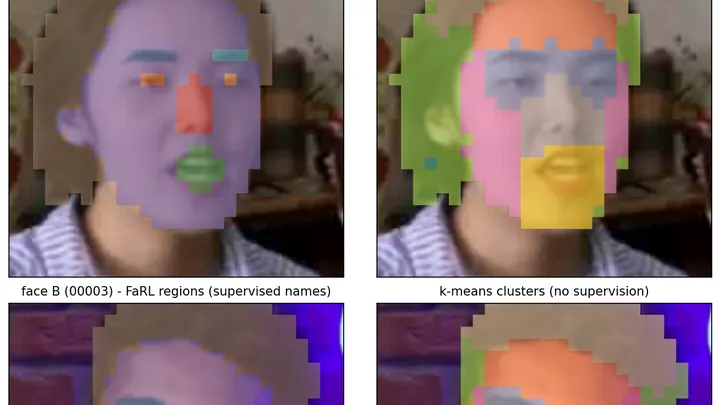
Trained on ordinary images, the DINOv3 model unexpectedly began to see faces as a spectrum: on its own, without hints, it isolates the eye, nose, and mouth regions. Like an invisible spectroscope, it breaks down a portrait into parts, just as a prism splits light into colors. Across 200 videos, feature labeling accuracy reached 83% (random guessing is 23%).
Computer Vision2026-07-161 minarXiv:2607.14513express
How to Pack a Million Shades into a Tiny Box
In a three-dimensional scene, each point is like a candy whose color changes depending on the viewing angle. To describe this play of shades, dozens of numbers are stored for each point — a special mathematical function invented by Joseph Fourier. Memory fills up instantly.
Image Processing2026-07-161 minarXiv:2607.14894express
Why photo enhancement software fails on unfamiliar images
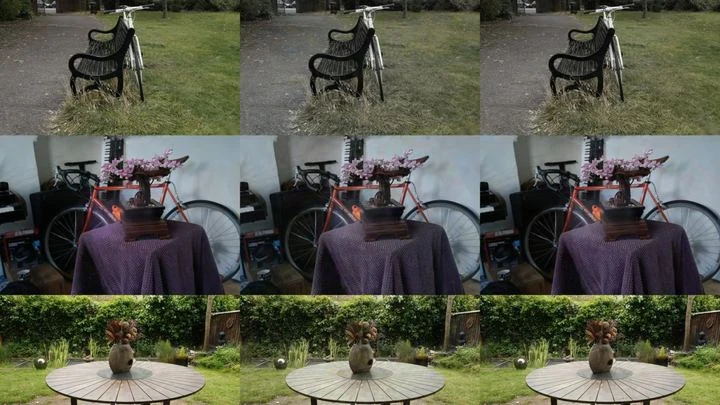
The photo enhancement algorithm is like a navigator that step by step leads a blurry picture toward a sharp view. It removes noise and distortions, moving pixel by pixel along a familiar map. But if the image was taken in unfamiliar conditions (say, with unusual blur) the map doesn't match the terrain.
Image Processing2026-07-161 minarXiv:2607.15045express
A Colorful World Through a Single Pixel: Adaptive Single-Pixel Camera
A single-pixel camera works like an artist creating a picture through a stencil with many holes. In each frame, only a portion of the light, modulated by a mask, a spatial light modulator, reaches the single sensor, and then the computer reconstructs the full image by assembling this mosaic with computational algorithms.
Image Processing2026-07-161 minarXiv:2607.15073express
World in Flickers: How a Camera Assembles an Image from Flashes
Unlike regular cameras, event-based ones only record moments when light becomes brighter or dimmer. They don't produce snapshots; instead, they send an endless stream of such flashes. Scientists turned this stream into a sharp picture of the Earth while flying over it on a satellite. Each flash is like a piece of a mosaic; together they form a still image.
Image Processing2026-08-082 minarXiv:2608.08173express
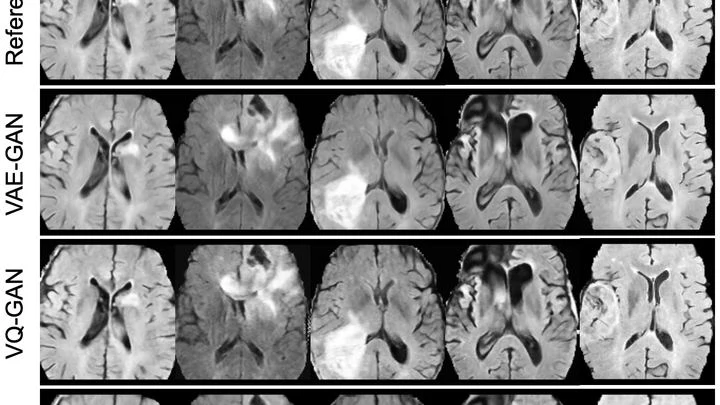
Separating Brain Scans: Where Disease Ends and Distortion Begins
Two scans of the same brain taken at different times are like photographs of the same house before and after renovation. To see what changed, you overlay them and look at the differences. But an MRI scanner is not a perfect camera: it adds its own distortions, as if the photo were taken through slightly warped glass.
Anatomy Without a Compass: How Medical Models See Space
A radiologist looks at an abdominal scan and sees not just organs but their spatial relationships: which kidney is larger, where the tumor lies relative to a vessel. It's like reading a map, where it's not enough to know where a city usually stands; you also need to measure the distance between two points on the ground.