Prognosis is the medical term for the likely course and outcome of a disease, including the chance of recovery, recurrence, or survival. It is a probabilistic assessment based on clinical data, such as tumor characteristics, patient health, and response to treatment. In modern medicine, prognosis increasingly relies on quantitative models that integrate imaging, genetic, and laboratory data to predict individual outcomes more accurately than population averages.
History
The concept of prognosis dates back to Hippocrates, who distinguished between diseases that were likely to resolve and those that were fatal. Modern prognostic tools emerged in the 20th century with the development of statistical methods and large clinical registries.
How it works
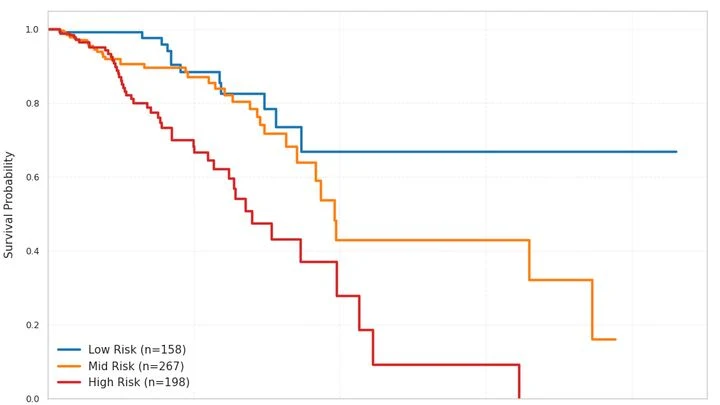
Prognostic models use statistical and machine-learning techniques to analyze historical patient data, identifying patterns that correlate with outcomes. For example, in cancer, features like tumor size, grade, and geneticmutations are combined with patient age and comorbidities to estimate survival or recurrence risk. These models are trained on large datasets and validated to ensure their predictions are reliable, often providing a risk score that guides treatment decisions.
In practice
Prognosis is used in oncology to decide whether to recommend aggressive chemotherapy or conservative monitoring, and in cardiology to stratify patients for interventions like stents or surgery.
Fun fact
Machine-learning models can now predict disease prognosis from routine blood tests years before symptoms appear, as highlighted in the article 'Обычный анализ крови предскажет болезнь за годы до симптомов'.
An old mattress stops bouncing back: the filling clumps up, and the springs lose their resilience. The ovary changes with age in much the same way, except that instead of filling, stiff connective tissue grows inside it, and the role of springs is played by the cells that support the eggs.
Picture a wind map over a mountain range. The wind mostly blows downhill, following elevation changes. But if you look closely, in some valleys the air swirls into little eddies that keep the wind from simply flowing down. That is exactly what the mutation field in human DNA looks like.
A translator who has finally turned off the noise in the hall hears every word for the first time. In much the same way, urinary aging clocks long confused the noise of the kidneys with the signal of age: the kidneys filter urine, and their work changes the mix of protein fragments by which we judge the wear and tear on the body.
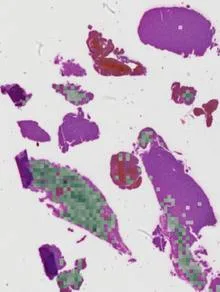
Imagine trying to figure out what happened in a room from the sound that lingers after a gunshot. The shot is gone, but the echo still bounces off the walls. That's roughly how a neuropathologist views a brain tissue section where the tumor itself is absent: the biopsy only captured healthy tissue that reacted to the disease.
In the 1980s, the DARPA speech recognition challenge settled the debate between statistical methods and hand-written rules, setting a common standard for the entire field.
Every one of us has wondered at least once how many years we'll live. In 1996, nearly two and a half thousand Japanese people over sixty answered that question in a national survey. Their answers became a kind of mirror reflecting hopes, fears, and habits of thought. Twenty-eight years later, researchers compared those forecasts with actual dates of death and found that the mirror was warped, but not useless.
Imagine someone hauling two sacks up a hill. One is stuffed with sugar the body cannot process. The other is filled with the years the body has lived faster than the calendar. While the sacks are light, the climb is manageable. But if both are filled to the brim, the legs give way, and the person collapses not with one disease but with several at once.
A person talks about a familiar face, and their speech becomes a mirror reflecting the workings of memory. In patients with temporal lobe epilepsy, this mirror sometimes grows cloudy: words come more slowly, phrases break off, pauses hang in the air. Doctors have long heard such complaints, but standard tests, where you have to name a picture or recall a list of words, often come back normal.
Chemotherapy hits cancer like a powerful spray on a dirty plate: the stream washes away almost everything, but crumbs remain in the cracks. Old models said that if you make the pressure strong enough, the plate becomes perfectly clean. New work shows this isn't so.
A clot grows like a snowball rolling down a mountain: small at first, it picks up new layers, and predicting when it will turn into an avalanche is tricky. In the blood, a long chain of reactions, the coagulation cascade, unfolds, where one substance activates another, and the clot gains mass.
Genes are like houses in a city: in some, life bustles; in others, silence reigns. This 'urban' genetic landscape was analyzed in a thousand women with breast cancer.
Ordinary models assume that infection is like a steady flow of water that washes over everyone equally. In reality, the stream from a sick person fluctuates: right after infection it barely trickles, then turns into a raging downpour, and later subsides. The chance of catching the virus depends on the strength of this flow at the moment of contact.
When a pipe bursts in the basement, a plumber acts step by step: locates the leak, measures the pressure, determines the cause, patches it up, and checks if it's dry. The same recipe — the standard model DMAIC — is being proposed against epidemics.
First, they determine the scope — how many hospital beds are occupied, which industries are sagging.
The cells of an organism are like twin chefs sharing a kitchen. They have the same cookbook (DNA), but when copying the recipe to a cheat sheet and assembling the dish, random errors occur. This unpredictability, entropy, means that in identical cells, protein levels are sometimes high, sometimes low.
Evolution flows like water. In a wide river, changes are smooth and slow, while a mountain stream churns with every stone. Population size and mutation rate set the channel: broad and calm, or narrow and rapid-filled.
Every morning you pick up the same mug, but the coffee tastes either bitter or just right. It's not about the coffee, and not about your character. Inside us, an invisible panel with dozens of sliders is constantly shifting: fatigue, hunger, anxiety, hormone levels.
In a car, the steering, brakes, and accelerator gradually fail. At first, you can still swerve around a pothole, but each year the maneuver takes more effort. At some point, even a perfect road becomes impassable — the car no longer obeys the driver.
That's exactly how the authors describe aging: not as the accumulation of rust or wear and tear, but as the loss of "controllability" of the body.
An orchestra plays without a conductor. Each musician has a score: that's the genes. But the volume and tempo depend on the acoustics of the hall, the mood, and the neighbors on stage. That's roughly how heredity and daily life together shape a teenager's behavior.
A doctor holds a stack of test results taken at different times. Each sheet on its own is just a snapshot of a single day, but what you want is a whole movie of how the disease unfolded. A neural network called Tempo learns to glue these scattered frames into a smooth reel.
Two specialists look at the same breast image. One is an experienced doctor, the other is an artificial intelligence program. Sometimes their opinions match, sometimes they diverge. How often they agree determines how accurately they can together distinguish healthy tissue from a tumor.
Show the same photo of a cat to two different neural networks, and they often reach a similar conclusion: "cat." But ask them for more detail, and their answers may diverge. One model focuses on the whiskers, another on the coat color, a third on the pose. So even within the "visual" world of neural networks, there's no complete unity.
Imagine a mountain range where height represents an organism's fitness. Every point on the slope is a particular set of genes. Evolution climbs upward, but the terrain of this phylogenetic network landscape is cut by ridges and valleys.
A typical recipe explains how to cook a dish: step by step, from the initial ingredients to the finished result. The new approach flips the logic: imagine that the future pie itself dictates how much flour to add now. In the quantum world, researchers suggest, a particle receives signals from the future measurement outcome.
A typical medical neural network sees a patient as a point on a map: there's height, blood pressure, a blood test, and the model places a single label: "healthy" or "sick." But in a real hospital, the map is always torn. One test is done on Monday, another a month later, and the CT scanner is a different brand altogether. A point on such a map is self-deception.
The brain of a person with Parkinson's disease works like an orchestra where the conductor either freezes or waves the baton off-beat. Medications don't help everyone, so doctors turn to stimulation — weak electrical pulses that restore the rhythm.
In a hospital, blood from a finger prick usually goes to the lab, and the result comes back the next day. The new method promises to cut that wait to a few minutes. Instead of catching light reflected off a sample, it reads the electrical voltage that arises at the boundary between two media, like the faint tingle you feel when you touch a battery with wet fingers.
PET/CT is like a map where cancer cells light up as bright spots. But what if the map is blank and the disease is still hiding somewhere? In 132 men with recurrent prostate cancer, doctors found no glowing lesions, but they decided to study the texture of the scan itself, like an experienced tracker noticing bent grass where an animal has passed.
In a turbulent flow, like a raging river, energy constantly cascades from large whirlpools to small ones. Occasionally, particularly powerful bursts occur, resembling sudden waves crashing against the shore. Scientists asked: can we know in advance when such a "wave" will strike? It turns out the answer depends on which vortices are present in the flow at that moment.
During a course of radiation therapy, the tumor and surrounding tissues can shift or change size. Doctors regularly take images and sometimes adjust the plan to keep the radiation on target. But how do you know how much dose has already been delivered and how much is still to come? Usually, this is estimated using simple rules that don't account for uncertainty.
Inside every cell, work is constantly underway: proteins communicate, genes turn on and off, and glitches in this system lead to disease. To find the culprit behind an ailment, scientists used to manually comb through research papers and databases, like a detective interviewing witnesses one by one. But there are so many connections that no one can handle it alone.
A doctor prescribes a pill for the heart and a pill for blood pressure. Individually, each helps, but together they can scramble signals in the blood and cause harm. These unwanted encounters between drugs are called interactions, and testing every pair in the lab is impossible: there are millions of them.
In a heart-lung machine, blood flows through narrow tubing and past rapidly spinning pump blades. Sometimes red blood cells can't take it: their membranes rupture, and hemoglobin spills into the plasma. For a patient, this is like pouring sand into a car's fuel system — small damages accumulate and wreck the whole mechanism.
A drop of blood can reveal how a tumor in the lungs is behaving. Doctors have long noticed that when the disease retreats, some blood markers rise while others fall. But tying these changes into a single coherent picture has been elusive.
A glass of water and a glass of jelly look the same but behave differently. So it is with prostate tissue: on a standard slide under a microscope, you can see both the tumor glands and the supporting connective tissue around them. Previously, pathologists focused only on the glands, treating the support as mere background.
The liver is a quiet workhorse. It processes everything we eat and drink, and rarely complains out loud. By the time the first obvious symptoms of cirrhosis appear, the disease has already destroyed a significant portion of the organ. Doctors have long sought a way to see into the liver's future, and a new study offers an unexpected tool — ordinary hospital records.
A translator who learned a language from thousands of books can interpret a conversation without being distracted by noise in the hall. Similarly, a neural network trained on 127,137 years of model climate produces a winter forecast in a fraction of a second, faster and more accurately than bulky dynamical systems.
A translator who jumps at every rustle in the hall starts mixing up words by the end of the meeting. Their confidence in being right grows, while their accuracy drops. That is roughly how poorly calibrated probabilistic forecasts behave: the model claims a high probability for an event, but reality disagrees.